Word Explanation
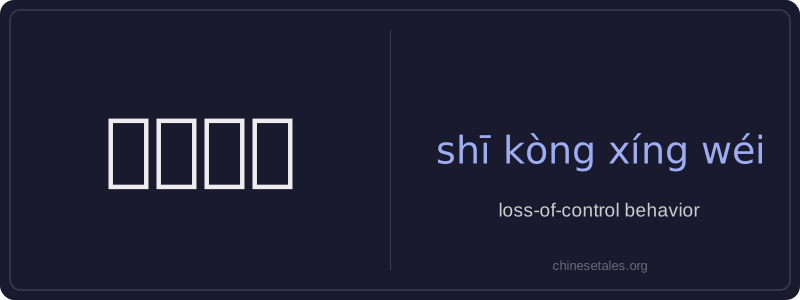
'失控行为' literally means 'lost-control behavior' — it describes actions that occur when a person temporarily loses rational self-regulation due to intense emotion, stress, fatigue, or psychological strain. The compound breaks down as 失 (shī, 'to lose'), 控 (kòng, 'control'), 行 (xíng, 'to act' or 'action'), and 为 (wéi, 'behavior' or 'conduct'). Together, they form a clinical and colloquial noun referring to impulsive, inappropriate, or disproportionate reactions — such as shouting uncontrollably, throwing objects, or sudden aggression.
This term is commonly used in psychology, education, parenting, and workplace discussions to describe observable behavioral breakdowns rather than internal feelings. It carries a neutral-to-slightly-negative connotation, implying a temporary lapse rather than intentional misconduct. While often applied to children or individuals with emotional regulation challenges, adults may also exhibit 失控行为 during crises or mental health episodes. It’s more formal than slang terms like '发飙' but less technical than clinical diagnoses like 'intermittent explosive disorder'.
Example Sentences
Related Words
国语
‘Guó yǔ’ literally means 'national language'—
无论谁
‘无论谁’ (wú lùn shéi) is a pronoun meaning
外语
‘外语’ literally means ‘outside language’ —
面条
‘面条’ (miàn tiáo) literally means ‘flour str
不对
不对 (bù duì) literally combines 不 (bù), meani
认为
‘认为’ (rèn wéi) is a transitive verb meaning
认同
‘认同’ (tóng rèn) is a verb meaning ‘to ident
违规
违规 (wéi guī) literally means 'to violate rules