Word Explanation
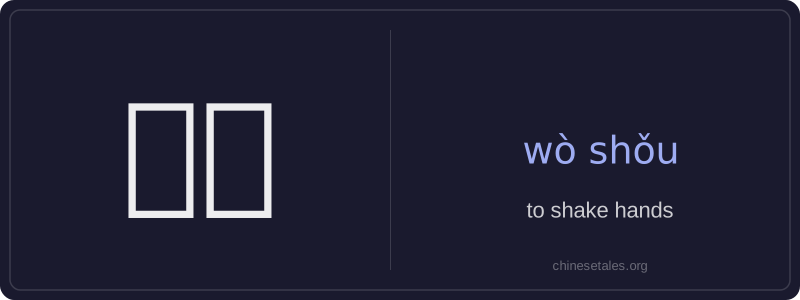
'Wò shǒu' literally combines the characters 握 (wò), meaning 'to grip' or 'to hold firmly', and 手 (shǒu), meaning 'hand'. Together, they form a verb meaning 'to shake hands' — a common physical gesture used to greet someone, seal an agreement, express congratulations, or show mutual respect. It is deeply embedded in Chinese social etiquette, especially in formal or professional settings like business meetings, introductions, or diplomatic encounters.
This verb is typically used intransitively with a subject performing the action, or transitively when specifying who is being shaken hands with (e.g., 'wò le tā de shǒu'). Unlike English, Chinese often omits the object pronoun unless emphasis or clarity is needed. The gesture carries cultural weight: a firm but not overpowering grip is preferred, and it’s customary to maintain brief eye contact while shaking hands.
Example Sentences
Related Words
国语
‘Guó yǔ’ literally means 'national language'—
无论谁
‘无论谁’ (wú lùn shéi) is a pronoun meaning
外语
‘外语’ literally means ‘outside language’ —
面条
‘面条’ (miàn tiáo) literally means ‘flour str
不对
不对 (bù duì) literally combines 不 (bù), meani
认为
‘认为’ (rèn wéi) is a transitive verb meaning
认同
‘认同’ (tóng rèn) is a verb meaning ‘to ident
违规
违规 (wéi guī) literally means 'to violate rules