Word Explanation
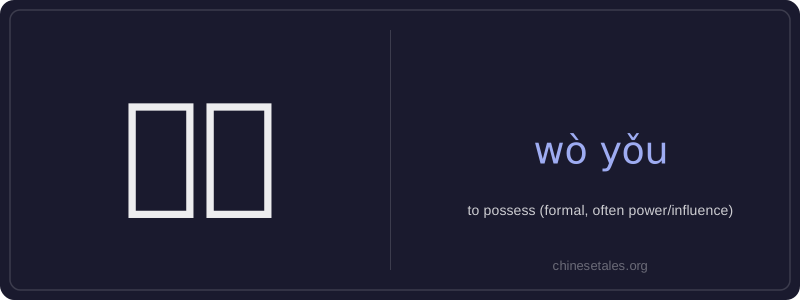
'Wò yǒu' literally combines 'wò' (to grip, hold firmly) and 'yǒu' (to have, possess), creating a formal, weighty verb meaning 'to possess'—especially power, authority, influence, or control. Unlike the neutral 'yǒu', 'wò yǒu' implies active, often institutional or strategic control: it suggests that the possessor not only owns something but wields it decisively, like holding a tool or weapon in hand. It is rarely used for everyday objects (e.g., you wouldn’t say 'wò yǒu a pen'); instead, it appears in political, legal, economic, or organizational contexts.
This term carries a tone of seriousness and gravity, frequently found in news reports, official documents, academic writing, and formal speeches. It emphasizes legitimacy, capacity, and responsibility — for instance, describing who holds decision-making power in a government body or which entity controls critical infrastructure. Its formality makes it unsuitable for casual conversation, where 'yǒu', 'zhǎngwò', or 'kòngzhì' would be more natural.
Example Sentences
Related Words
国语
‘Guó yǔ’ literally means 'national language'—
无论谁
‘无论谁’ (wú lùn shéi) is a pronoun meaning
外语
‘外语’ literally means ‘outside language’ —
面条
‘面条’ (miàn tiáo) literally means ‘flour str
不对
不对 (bù duì) literally combines 不 (bù), meani
认为
‘认为’ (rèn wéi) is a transitive verb meaning
认同
‘认同’ (tóng rèn) is a verb meaning ‘to ident
违规
违规 (wéi guī) literally means 'to violate rules