Word Explanation
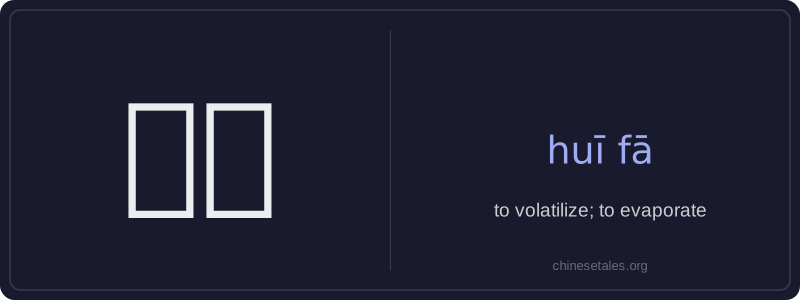
挥发 (huīfā) is a verb meaning 'to volatilize' or 'to evaporate' — describing the physical process where a substance changes from liquid or solid directly into vapor at room temperature, without boiling. The character 挥 (huī) originally means 'to wave' or 'to brandish', suggesting motion and dispersion; 发 (fā) means 'to emit' or 'to send out'. Together, they evoke the image of something being actively released or dispersed into the air. This term is commonly used in scientific, medical, and everyday contexts involving chemicals, medicines, solvents, perfumes, and disinfectants.
It often appears in discussions about drug stability (e.g., volatile active ingredients), indoor air quality (e.g., VOCs), or food storage (e.g., aromatic compounds fading). Unlike general terms like 蒸发 (zhēngfā, 'evaporation' requiring heat), 挥发 emphasizes spontaneous, ambient-temperature vaporization — especially for substances with high volatility like alcohol, acetone, or essential oils.
Example Sentences
Related Words
国语
‘Guó yǔ’ literally means 'national language'—
无论谁
‘无论谁’ (wú lùn shéi) is a pronoun meaning
外语
‘外语’ literally means ‘outside language’ —
面条
‘面条’ (miàn tiáo) literally means ‘flour str
不对
不对 (bù duì) literally combines 不 (bù), meani
认为
‘认为’ (rèn wéi) is a transitive verb meaning
认同
‘认同’ (tóng rèn) is a verb meaning ‘to ident
违规
违规 (wéi guī) literally means 'to violate rules