Word Explanation
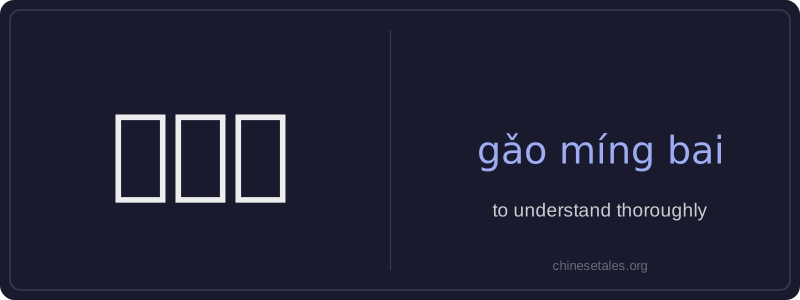
‘搞明白’ is a common colloquial verb phrase meaning ‘to understand thoroughly’ or ‘to figure out completely’. It combines three characters: 搞 (gǎo), which in this context functions as a versatile verb meaning ‘to deal with’ or ‘to handle’; 明 (míng), meaning ‘clear’ or ‘bright’; and 白 (bái), meaning ‘white’ or ‘plain’, often used together with 明 to form the compound 明白 (míngbai), meaning ‘to understand’. Together, 搞明白 emphasizes the active process of working through something until full clarity is achieved — not just passive comprehension, but deliberate effort to resolve confusion.
This phrase is widely used in everyday spoken and informal written Chinese, especially when discussing problems, instructions, explanations, or complex ideas. It often implies that understanding required some effort, questioning, or investigation. While standard Mandarin, it’s more frequent in conversational contexts than formal writing, where ‘弄清楚’ (nòng qīngchu) or ‘理解’ (lǐjiě) may be preferred.
Example Sentences
Related Words
国语
‘Guó yǔ’ literally means 'national language'—
无论谁
‘无论谁’ (wú lùn shéi) is a pronoun meaning
外语
‘外语’ literally means ‘outside language’ —
面条
‘面条’ (miàn tiáo) literally means ‘flour str
不对
不对 (bù duì) literally combines 不 (bù), meani
认为
‘认为’ (rèn wéi) is a transitive verb meaning
认同
‘认同’ (tóng rèn) is a verb meaning ‘to ident
违规
违规 (wéi guī) literally means 'to violate rules