Word Explanation
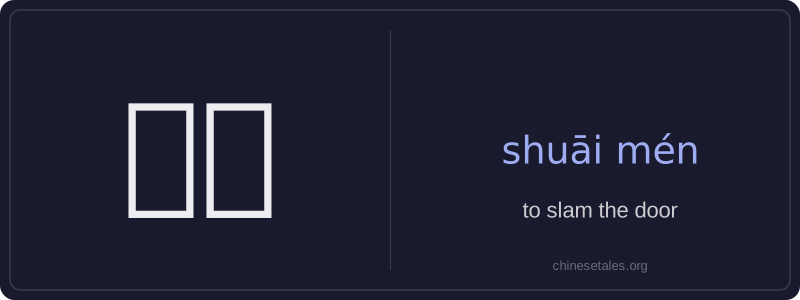
‘摔门’ is a compound verb meaning 'to slam the door'—a forceful, often angry or frustrated action where someone shuts a door hard enough to make it bang loudly. The first character 摔 (shuāi) means 'to throw', 'to drop', or 'to slam', carrying connotations of abruptness and physical force; the second character 门 (mén) means 'door'. Together, they form an idiomatic verb that emphasizes emotional intensity rather than mere physical motion—it’s rarely used neutrally.
This expression is common in spoken Mandarin and appears frequently in dialogue to convey anger, impatience, resentment, or dramatic departure. It’s often accompanied by other cues like raised voices, stomping, or silence afterward. While grammatically a verb, it functions as an inseparable unit: you cannot insert objects or aspect particles between the two characters (e.g., *摔了门 is incorrect; say 摔了门 instead). It’s typically used in the perfective aspect with 了 or in imperatives, and almost always implies interpersonal tension.
Example Sentences
Related Words
国语
‘Guó yǔ’ literally means 'national language'—
无论谁
‘无论谁’ (wú lùn shéi) is a pronoun meaning
外语
‘外语’ literally means ‘outside language’ —
面条
‘面条’ (miàn tiáo) literally means ‘flour str
不对
不对 (bù duì) literally combines 不 (bù), meani
认为
‘认为’ (rèn wéi) is a transitive verb meaning
认同
‘认同’ (tóng rèn) is a verb meaning ‘to ident
违规
违规 (wéi guī) literally means 'to violate rules