Word Explanation
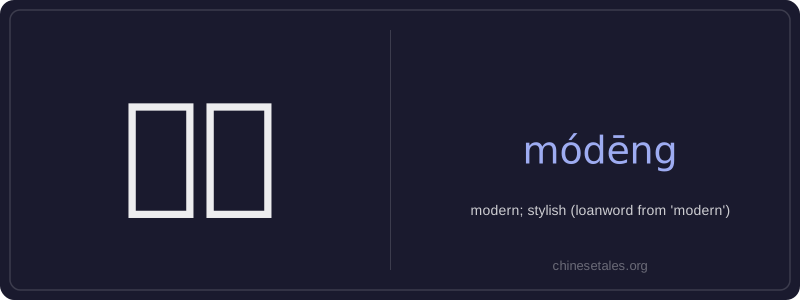
‘摩登’ is a phonetic loanword from the English word ‘modern’, adapted into Chinese characters for their sound rather than meaning. Neither 摩 nor 登 carries its usual semantic value here—‘摩’ typically means ‘to rub’ or ‘to approach’, and ‘登’ usually means ‘to ascend’ or ‘to register’, but together they function purely as a transcription of /mɔːˈdɛn/. As an adjective, 摩登 describes people, clothing, styles, or lifestyles that are contemporary, fashionable, and trend-conscious—often with a touch of urban sophistication or Western-influenced flair.
This term carries mild nostalgic or stylistic connotations; it’s frequently used in contexts evoking 1920s–40s Shanghai glamour or retro-modern aesthetics, though it remains current in fashion journalism and casual speech. It’s more colloquial and vivid than the neutral term 现代 (xiàndài), and less technical than 当代 (dāngdài). While not slang, it’s rarely used in formal academic or official writing.
Example Sentences
Related Words
国语
‘Guó yǔ’ literally means 'national language'—
无论谁
‘无论谁’ (wú lùn shéi) is a pronoun meaning
外语
‘外语’ literally means ‘outside language’ —
面条
‘面条’ (miàn tiáo) literally means ‘flour str
不对
不对 (bù duì) literally combines 不 (bù), meani
认为
‘认为’ (rèn wéi) is a transitive verb meaning
认同
‘认同’ (tóng rèn) is a verb meaning ‘to ident
违规
违规 (wéi guī) literally means 'to violate rules