Word Explanation
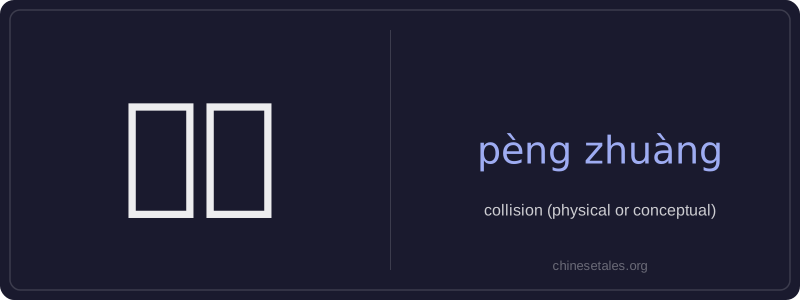
碰撞 (pèng zhuàng) literally combines 碰 (to touch, bump) and 撞 (to hit, strike), forming a compound noun meaning 'collision'—a sudden, forceful impact between two or more objects. It describes both physical events (e.g., vehicles hitting each other) and abstract clashes (e.g., conflicting ideas, interests, or personalities). Unlike the more technical term 冲突 (chōng tū), which emphasizes disagreement or tension, 碰撞 often implies immediacy, physical contact, or unexpected convergence.
This word is neutral in register and widely used in news reports, scientific contexts (e.g., physics), everyday conversation, and even figurative expressions. It can be used with verbs like 发生 (to occur), 避免 (to avoid), or 引起 (to cause), and commonly appears in phrases like 车辆碰撞 (vehicle collision) or 思想碰撞 (clash of ideas). While it may sound dramatic, it’s not inherently negative—sometimes a ‘collision’ sparks innovation or deeper understanding.
Example Sentences
Related Words
国语
‘Guó yǔ’ literally means 'national language'—
无论谁
‘无论谁’ (wú lùn shéi) is a pronoun meaning
外语
‘外语’ literally means ‘outside language’ —
面条
‘面条’ (miàn tiáo) literally means ‘flour str
不对
不对 (bù duì) literally combines 不 (bù), meani
认为
‘认为’ (rèn wéi) is a transitive verb meaning
认同
‘认同’ (tóng rèn) is a verb meaning ‘to ident
违规
违规 (wéi guī) literally means 'to violate rules