Word Explanation
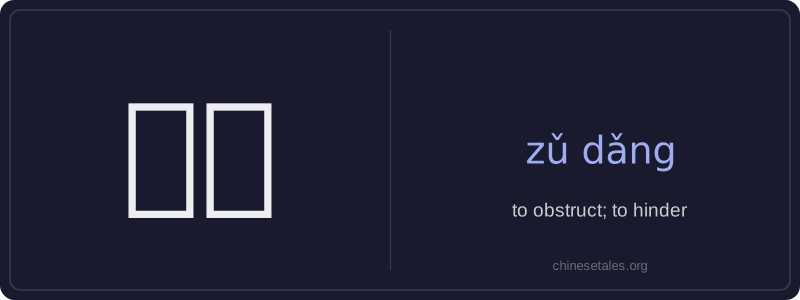
阻挡 is a transitive verb meaning 'to obstruct' or 'to hinder' — it describes the act of physically or figuratively blocking something from proceeding, moving, or happening. The first character 阻 (zǔ) means 'to impede' or 'to prevent', often implying resistance or opposition; the second character 挡 (dǎng) means 'to block' or 'to shield', emphasizing a physical or forceful barrier. Together, they form a compound that stresses active interference — not just passive absence, but deliberate intervention to stop progress.
This word is commonly used in both literal and abstract contexts: for example, a fallen tree may 阻挡道路 (block the road), while bureaucracy might 阻挡 innovation (hinder innovation). It often appears with objects like 道路 (road), 进展 (progress), 视线 (line of sight), or 改革 (reform). It carries a neutral-to-slightly negative tone and is standard in formal and informal speech, though less common in casual daily chat than simpler verbs like 挡 or 阻止.
Example Sentences
Related Words
国语
‘Guó yǔ’ literally means 'national language'—
无论谁
‘无论谁’ (wú lùn shéi) is a pronoun meaning
外语
‘外语’ literally means ‘outside language’ —
面条
‘面条’ (miàn tiáo) literally means ‘flour str
不对
不对 (bù duì) literally combines 不 (bù), meani
认为
‘认为’ (rèn wéi) is a transitive verb meaning
认同
‘认同’ (tóng rèn) is a verb meaning ‘to ident
违规
违规 (wéi guī) literally means 'to violate rules