Word Explanation
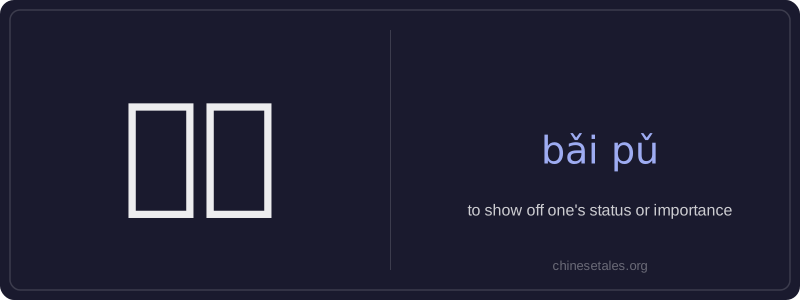
‘摆谱’ is a colloquial verb meaning to show off one’s status, authority, or importance—often in an exaggerated, pretentious, or unnecessarily formal way. Literally, ‘摆’ means ‘to display’ or ‘to arrange’, and ‘谱’ originally referred to a musical score or a formal protocol; together, they evoke the image of ‘laying out one’s official protocol’ like a rigid, self-important performance. It carries a distinctly negative or teasing connotation, implying the person is acting superior without real justification.
This expression is commonly used in informal spoken Chinese, especially when describing someone who insists on special treatment, delays action to assert dominance, or behaves with excessive ceremony over trivial matters—like a boss refusing to speak directly to staff, or a guest demanding unreasonable accommodations. It’s frequently heard in workplace banter, family teasing, or social commentary about petty elitism.
Example Sentences
Related Words
国语
‘Guó yǔ’ literally means 'national language'—
无论谁
‘无论谁’ (wú lùn shéi) is a pronoun meaning
外语
‘外语’ literally means ‘outside language’ —
面条
‘面条’ (miàn tiáo) literally means ‘flour str
不对
不对 (bù duì) literally combines 不 (bù), meani
认为
‘认为’ (rèn wéi) is a transitive verb meaning
认同
‘认同’ (tóng rèn) is a verb meaning ‘to ident
违规
违规 (wéi guī) literally means 'to violate rules