Word Explanation
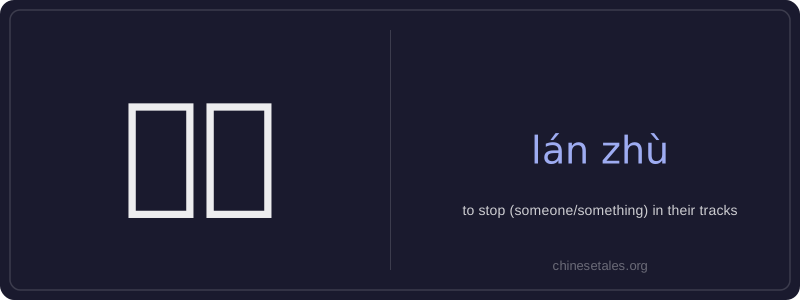
拦住 is a compound verb meaning 'to stop (someone or something) in their tracks'—literally, to intercept and hold fast. The first character 拦 (lán) means 'to block' or 'to obstruct', often by standing in someone’s path; the second character 住 (zhù) functions as a resultative complement indicating cessation of movement or completion of the blocking action. Together, they convey an active, physical intervention that halts forward motion immediately—not just delaying, but fully stopping.
This verb is commonly used when describing urgent or protective interventions: a parent stopping a child from running into traffic, a guard barring entry to a restricted area, or even an animal like a dog blocking another animal’s path. It implies direct, bodily involvement and intentionality, and often carries a tone of urgency or necessity. While it can be used with people, vehicles, or animals, it's especially frequent in contexts involving safety, control, or boundary enforcement.
Example Sentences
Related Words
国语
‘Guó yǔ’ literally means 'national language'—
无论谁
‘无论谁’ (wú lùn shéi) is a pronoun meaning
外语
‘外语’ literally means ‘outside language’ —
面条
‘面条’ (miàn tiáo) literally means ‘flour str
不对
不对 (bù duì) literally combines 不 (bù), meani
认为
‘认为’ (rèn wéi) is a transitive verb meaning
认同
‘认同’ (tóng rèn) is a verb meaning ‘to ident
违规
违规 (wéi guī) literally means 'to violate rules