Word Explanation
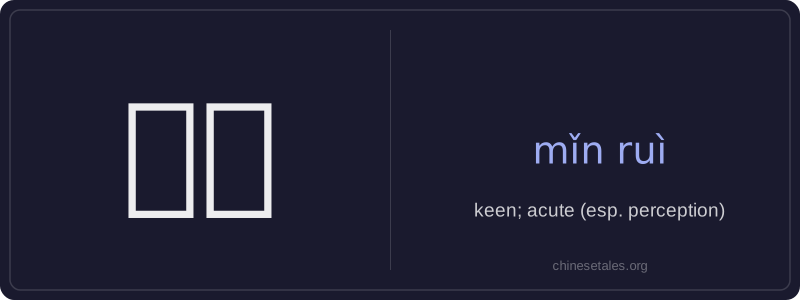
敏 (mǐn) means 'quick', 'sensitive', or 'alert', often describing mental or physical responsiveness. 锐 (ruì) means 'sharp', 'keen', or 'penetrating', evoking precision and intensity—like a sharp blade or focused gaze. Together, 敏锐 (mǐn ruì) describes an exceptionally acute ability to perceive, detect, or understand subtle details—especially in senses, judgment, or insight. It’s commonly used to praise someone’s perceptiveness, such as noticing emotional shifts, spotting errors quickly, or interpreting complex situations with clarity.
The term carries a positive, slightly formal tone and appears frequently in descriptions of animals’ survival traits (e.g., a fox’s敏锐 hearing), human cognition (a journalist’s敏锐 intuition), or professional skills (a doctor’s敏锐 diagnostic sense). While it can modify nouns directly (e.g., 敏锐的观察力), it’s rarely used predicatively without additional structure (e.g., *他很敏锐* is acceptable, but *他敏锐* alone sounds incomplete without context).
Example Sentences
Related Words
国语
‘Guó yǔ’ literally means 'national language'—
无论谁
‘无论谁’ (wú lùn shéi) is a pronoun meaning
外语
‘外语’ literally means ‘outside language’ —
面条
‘面条’ (miàn tiáo) literally means ‘flour str
不对
不对 (bù duì) literally combines 不 (bù), meani
认为
‘认为’ (rèn wéi) is a transitive verb meaning
认同
‘认同’ (tóng rèn) is a verb meaning ‘to ident
违规
违规 (wéi guī) literally means 'to violate rules