Word Explanation
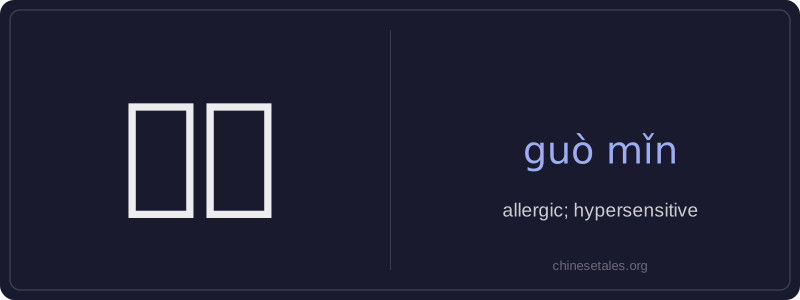
过敏 (guòmǐn) literally combines 过 (guò, 'excess' or 'beyond') and 敏 (mǐn, 'sensitive' or 'responsive'), conveying the idea of an exaggerated or abnormal sensitivity—specifically to substances like pollen, food, or medication. As a noun, it refers to an allergic reaction; as an adjective, it describes someone or something that is allergic (e.g., 过敏体质, 'allergy-prone constitution').
This term is widely used in medical, everyday, and public health contexts in Chinese. It commonly appears in discussions about symptoms (itching, rashes, sneezing), triggers (peanuts, dust mites), and prevention (avoiding allergens). Unlike English 'allergic', which requires 'to', 过敏 can stand alone or pair directly with the trigger using the particle 对 (e.g., 对花生过敏). It’s not used for emotional sensitivity—terms like 敏感 are preferred there.
Example Sentences
Related Words
国语
‘Guó yǔ’ literally means 'national language'—
无论谁
‘无论谁’ (wú lùn shéi) is a pronoun meaning
外语
‘外语’ literally means ‘outside language’ —
面条
‘面条’ (miàn tiáo) literally means ‘flour str
不对
不对 (bù duì) literally combines 不 (bù), meani
认为
‘认为’ (rèn wéi) is a transitive verb meaning
认同
‘认同’ (tóng rèn) is a verb meaning ‘to ident
违规
违规 (wéi guī) literally means 'to violate rules