Word Explanation
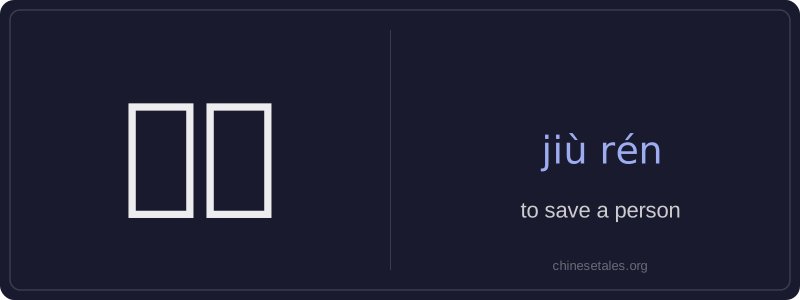
‘救人’ literally means 'to save a person' and functions as a transitive verb. The first character, 救 (jiù), means 'to rescue' or 'to save from danger,' while 人 (rén) means 'person' or 'people.' Together, they express the act of intervening to protect someone’s life or well-being—commonly in emergencies like accidents, drowning, fires, or medical crises. It implies urgency, intentionality, and moral responsibility.
This phrase is neutral in register and widely used in both spoken and written Chinese—appearing in news reports, safety training, everyday conversation, and public service announcements. While it can refer to saving one person or many, context usually clarifies number. Unlike more formal or technical terms (e.g., 急救 'first aid'), 救人 emphasizes the human action and agency of the rescuer rather than the medical procedure itself.
Example Sentences
Related Words
国语
‘Guó yǔ’ literally means 'national language'—
无论谁
‘无论谁’ (wú lùn shéi) is a pronoun meaning
外语
‘外语’ literally means ‘outside language’ —
面条
‘面条’ (miàn tiáo) literally means ‘flour str
不对
不对 (bù duì) literally combines 不 (bù), meani
认为
‘认为’ (rèn wéi) is a transitive verb meaning
认同
‘认同’ (tóng rèn) is a verb meaning ‘to ident
违规
违规 (wéi guī) literally means 'to violate rules