Word Explanation
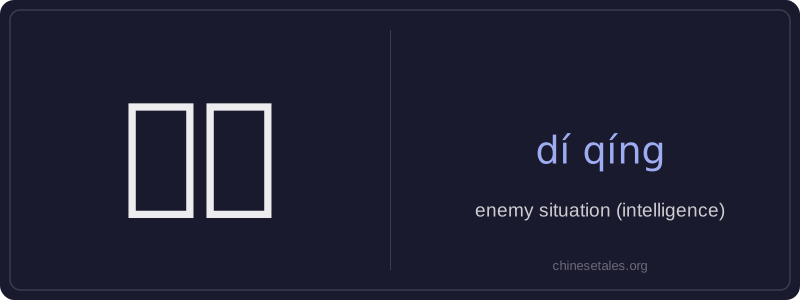
‘敌情’ literally means 'enemy situation' and refers to intelligence or information about an adversary’s capabilities, intentions, positions, or movements. The first character, 敌 (dí), means 'enemy' or 'opponent'; the second, 情 (qíng), means 'situation', 'circumstances', or 'information' — as in 情报 (qíngbào, 'intelligence'). Together, they form a formal, military-derived term used primarily in defense, security, and strategic contexts.
While originally rooted in warfare, 敌情 is also used metaphorically in business, sports, or cybersecurity to describe competitive intelligence — for example, analyzing a rival company’s market strategy. It carries a serious, professional tone and rarely appears in casual speech. The word implies active monitoring and assessment, not just passive knowledge. It is often paired with verbs like 掌握 (zhǎngwò, 'to grasp'), 分析 (fēnxī, 'to analyze'), or 侦察 (zhēnchá, 'to scout') — emphasizing its operational function in decision-making.
Example Sentences
Related Words
国语
‘Guó yǔ’ literally means 'national language'—
无论谁
‘无论谁’ (wú lùn shéi) is a pronoun meaning
外语
‘外语’ literally means ‘outside language’ —
面条
‘面条’ (miàn tiáo) literally means ‘flour str
不对
不对 (bù duì) literally combines 不 (bù), meani
认为
‘认为’ (rèn wéi) is a transitive verb meaning
认同
‘认同’ (tóng rèn) is a verb meaning ‘to ident
违规
违规 (wéi guī) literally means 'to violate rules