Word Explanation
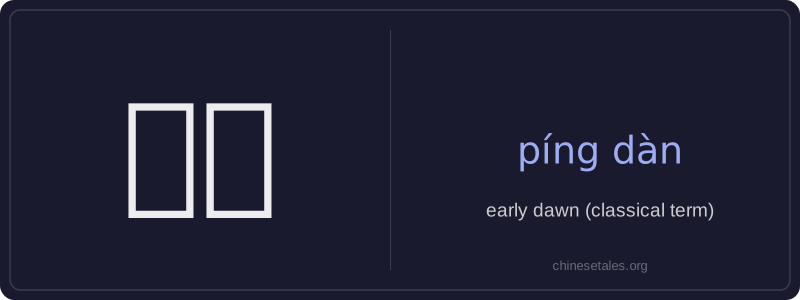
‘平旦’ is a classical Chinese term meaning ‘early dawn’—the quiet, pale light just before sunrise, typically around 3–5 a.m. The character 平 (píng) conveys ‘level,’ ‘calm,’ or ‘even,’ suggesting the stillness and balance of the moment; 旦 (dàn) literally means ‘dawn’ or ‘daybreak,’ pictographically depicting the sun rising over the horizon. Together, 平旦 evokes not just a time of day but a serene, transitional phase in the natural cycle—often associated with purity, renewal, and quiet reflection.
This term appears frequently in classical poetry, medical texts (e.g., the Huangdi Neijing, which notes physiological rhythms tied to 平旦), and historical records. It is rarely used in modern spoken Mandarin, surviving mainly in literary, poetic, or scholarly contexts. Learners should recognize it as formal and archaic—not interchangeable with common terms like 清晨 or 黎明, which are more neutral and contemporary.
Example Sentences
Related Words
国语
‘Guó yǔ’ literally means 'national language'—
无论谁
‘无论谁’ (wú lùn shéi) is a pronoun meaning
外语
‘外语’ literally means ‘outside language’ —
面条
‘面条’ (miàn tiáo) literally means ‘flour str
不对
不对 (bù duì) literally combines 不 (bù), meani
认为
‘认为’ (rèn wéi) is a transitive verb meaning
认同
‘认同’ (tóng rèn) is a verb meaning ‘to ident
违规
违规 (wéi guī) literally means 'to violate rules