Word Explanation
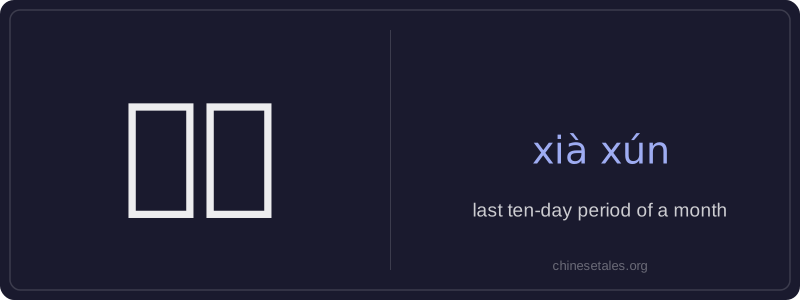
‘下旬’ literally means ‘lower ten-day period’ and refers specifically to the last ten days of a month—days 21 through 30 (or 31). The character ‘下’ (xià) means ‘lower’ or ‘last’, indicating position in sequence, while ‘旬’ (xún) is an ancient Chinese unit of time equal to ten days—traditionally used to divide each month into three parts: 上旬 (first ten days), 中旬 (middle ten days), and 下旬 (last ten days). This term is still widely used in formal writing, weather forecasts, economic reports, and official schedules.
Although less common in casual speech (where people usually say ‘the end of the month’), ‘下旬’ appears frequently in news, government documents, and business contexts. It carries a neutral-to-formal register and reflects China’s historical calendrical system. Understanding ‘下旬’ helps learners interpret time references accurately in written Chinese, especially when reading announcements or planning around monthly deadlines.
Example Sentences
Related Words
国语
‘Guó yǔ’ literally means 'national language'—
无论谁
‘无论谁’ (wú lùn shéi) is a pronoun meaning
外语
‘外语’ literally means ‘outside language’ —
面条
‘面条’ (miàn tiáo) literally means ‘flour str
不对
不对 (bù duì) literally combines 不 (bù), meani
认为
‘认为’ (rèn wéi) is a transitive verb meaning
认同
‘认同’ (tóng rèn) is a verb meaning ‘to ident
违规
违规 (wéi guī) literally means 'to violate rules