Word Explanation
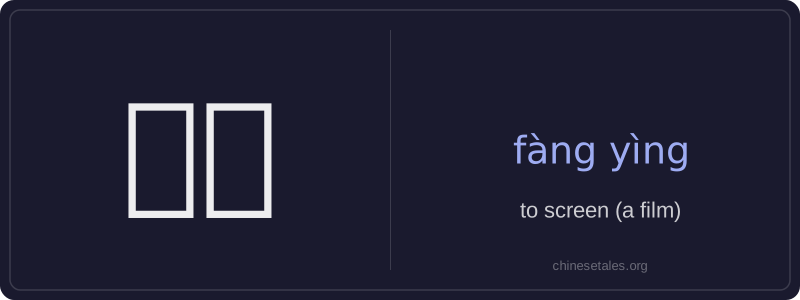
放映 (fàng yìng) is a verb meaning 'to screen' or 'to show' a film, video, or slideshow. It combines 放 (fàng), which means 'to release', 'to project', or 'to set in motion', and 映 (yìng), meaning 'to reflect', 'to project an image', or 'to appear visually'. Together, they evoke the technical act of projecting moving images onto a screen for an audience. The word is commonly used in contexts involving cinemas, classrooms, community centers, or digital platforms — anywhere visual media is formally presented.
This term carries a neutral-to-formal register and is rarely used for casual home viewing; instead, it implies organized, public, or institutional screening. It’s often paired with nouns like 电影 (diànyǐng, 'film'), 纪录片 (jìlùpiàn, 'documentary'), or 幻灯片 (huàndēngpiàn, 'slide presentation'). While historically tied to film projectors, it remains fully current for digital screenings as well — emphasizing the act of display rather than the medium.
Example Sentences
Related Words
国语
‘Guó yǔ’ literally means 'national language'—
无论谁
‘无论谁’ (wú lùn shéi) is a pronoun meaning
外语
‘外语’ literally means ‘outside language’ —
面条
‘面条’ (miàn tiáo) literally means ‘flour str
不对
不对 (bù duì) literally combines 不 (bù), meani
认为
‘认为’ (rèn wéi) is a transitive verb meaning
认同
‘认同’ (tóng rèn) is a verb meaning ‘to ident
违规
违规 (wéi guī) literally means 'to violate rules