Word Explanation
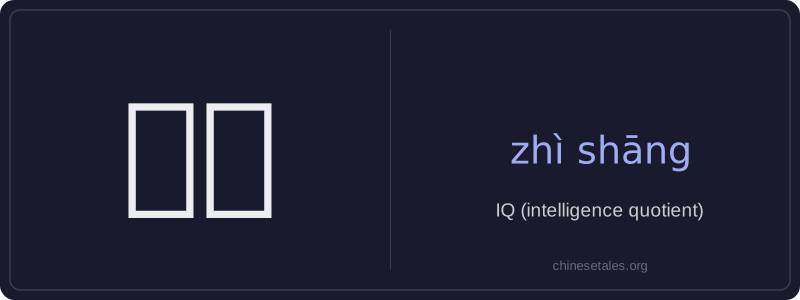
智商 (zhì shāng) is the Chinese term for 'IQ' or 'intelligence quotient'—a standardized measure of human cognitive ability, typically derived from formal psychological tests. The character 智 means 'wisdom' or 'intelligence', while 商 literally means 'quotient' or 'ratio', reflecting the mathematical origin of IQ as a score calculated by dividing mental age by chronological age and multiplying by 100.
This term is widely used in educational, clinical, and everyday contexts to discuss intellectual capacity, learning potential, or cognitive development. While it carries scientific connotations, in informal speech it can sometimes be used loosely or even humorously—for example, to comment on someone’s decision-making ('Your IQ seems low right now!'). However, using it critically or judgmentally toward others may sound insensitive, so context and tone matter greatly.
Example Sentences
Related Words
国语
‘Guó yǔ’ literally means 'national language'—
无论谁
‘无论谁’ (wú lùn shéi) is a pronoun meaning
外语
‘外语’ literally means ‘outside language’ —
面条
‘面条’ (miàn tiáo) literally means ‘flour str
不对
不对 (bù duì) literally combines 不 (bù), meani
认为
‘认为’ (rèn wéi) is a transitive verb meaning
认同
‘认同’ (tóng rèn) is a verb meaning ‘to ident
违规
违规 (wéi guī) literally means 'to violate rules