Word Explanation
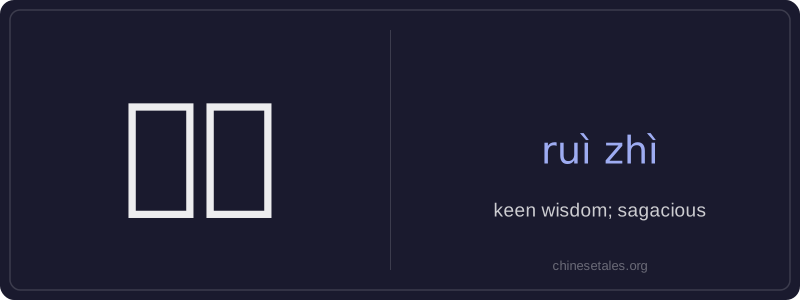
睿智 (ruì zhì) is an elegant, formal adjective meaning 'keen wisdom' or 'sagacious'—describing a person’s profound, insightful, and discerning intelligence. The character 睿 (ruì) conveys deep perception and clarity of mind, often associated with enlightened judgment; 智 (zhì) means 'wisdom' or 'intelligence', emphasizing rational understanding and sound reasoning. Together, they form a compound that goes beyond ordinary cleverness—it suggests mature, morally grounded insight, frequently attributed to elders, scholars, leaders, or historical figures.
This word is commonly used in written Chinese and formal speech, especially when praising someone’s thoughtful decisions or reflective character. It appears in literature, biographies, news editorials, and academic discourse—not in casual conversation. While it can modify nouns directly (e.g., 睿智的见解 'sagacious insights'), it’s rarely used predicatively without additional context (e.g., *他很睿智* is grammatical but sounds literary and elevated, not colloquial).
Example Sentences
Related Words
国语
‘Guó yǔ’ literally means 'national language'—
无论谁
‘无论谁’ (wú lùn shéi) is a pronoun meaning
外语
‘外语’ literally means ‘outside language’ —
面条
‘面条’ (miàn tiáo) literally means ‘flour str
不对
不对 (bù duì) literally combines 不 (bù), meani
认为
‘认为’ (rèn wéi) is a transitive verb meaning
认同
‘认同’ (tóng rèn) is a verb meaning ‘to ident
违规
违规 (wéi guī) literally means 'to violate rules