Word Explanation
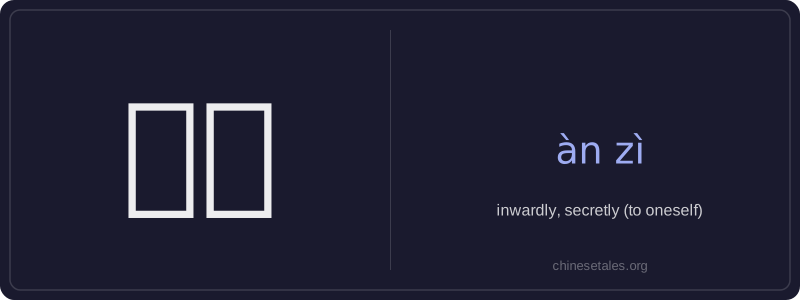
暗自 (àn zì) is an adverb meaning 'inwardly,' 'secretly,' or 'to oneself' — describing thoughts, feelings, or actions that occur privately, without outward expression. The character 暗 (àn) means 'dark,' 'hidden,' or 'concealed,' while 自 (zì) means 'self.' Together, they literally suggest 'hidden self' — emphasizing internal, unspoken mental activity. It’s commonly used to describe quiet emotional reactions like worry, joy, or determination that one keeps to oneself.
This word appears frequently in written Chinese and formal spoken contexts, especially in narratives, essays, and dialogues where inner states are revealed. It often modifies verbs like 想 (think), 喜欢 (like), 决定 (decide), or 叹气 (sigh). Unlike colloquial alternatives, 暗自 carries a subtle literary tone and implies conscious restraint — the subject chooses not to reveal their feeling or intention externally, even if others might suspect it.
Example Sentences
Related Words
国语
‘Guó yǔ’ literally means 'national language'—
无论谁
‘无论谁’ (wú lùn shéi) is a pronoun meaning
外语
‘外语’ literally means ‘outside language’ —
面条
‘面条’ (miàn tiáo) literally means ‘flour str
不对
不对 (bù duì) literally combines 不 (bù), meani
认为
‘认为’ (rèn wéi) is a transitive verb meaning
认同
‘认同’ (tóng rèn) is a verb meaning ‘to ident
违规
违规 (wéi guī) literally means 'to violate rules