Word Explanation
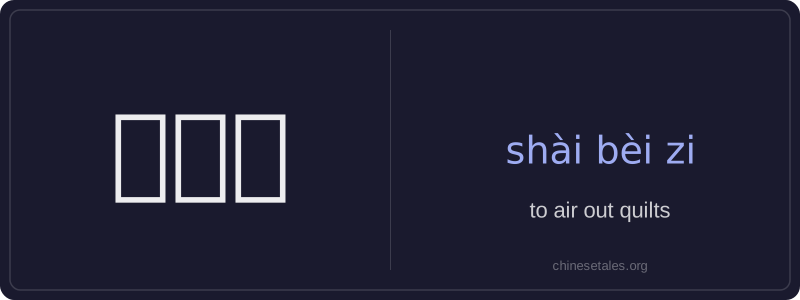
'Shài bèi zi' literally means 'to sun quilts' — a traditional practice in China where people hang quilts, comforters, or duvets outdoors on sunny days to remove moisture, eliminate odors, and kill dust mites using natural UV light and warmth. The verb 晒 (shài) means 'to expose to sunlight', 被 (bèi) refers specifically to a quilt or padded blanket (not just any 'cover'), and 子 (zi) is a common nominal suffix that makes the compound a noun-like verbal phrase. Though grammatically a verb, it functions as a fixed action phrase.
This activity is especially common in spring and autumn when humidity fluctuates, and it’s deeply embedded in household routines across northern and central China. Families often do it on weekends or during national holidays like Qingming or Mid-Autumn Festival, turning it into a quiet, communal domestic ritual — sometimes even a gentle reminder of care for one’s living space and well-being.
Example Sentences
Related Words
国语
‘Guó yǔ’ literally means 'national language'—
无论谁
‘无论谁’ (wú lùn shéi) is a pronoun meaning
外语
‘外语’ literally means ‘outside language’ —
面条
‘面条’ (miàn tiáo) literally means ‘flour str
不对
不对 (bù duì) literally combines 不 (bù), meani
认为
‘认为’ (rèn wéi) is a transitive verb meaning
认同
‘认同’ (tóng rèn) is a verb meaning ‘to ident
违规
违规 (wéi guī) literally means 'to violate rules