Word Explanation
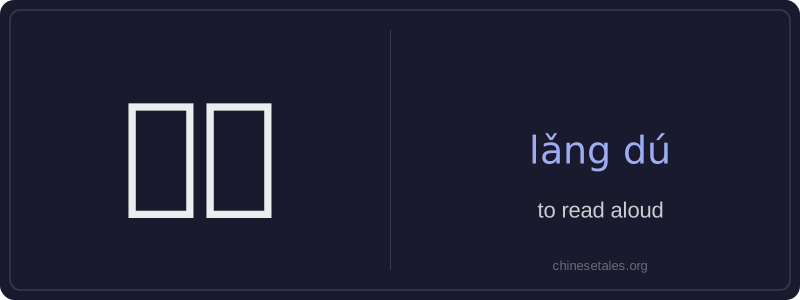
'朗读' (lǎng dú) is a verb meaning 'to read aloud' — emphasizing clear, expressive, and audible reading, often with attention to pronunciation, rhythm, and intonation. The first character 朗 (lǎng) means 'clear', 'loud', or 'bright', suggesting openness and clarity; the second character 读 (dú) means 'to read'. Together, they convey the idea of reading in a way that is intelligible to others — not silent or mumbled, but deliberate and vocal.
This word is commonly used in educational settings (e.g., language learning, literature classes), public speaking practice, or daily routines like morning reading sessions. It implies intentionality and performance: you're not just decoding text, but communicating it outwardly. Unlike the neutral '读' (dú), which can mean silent or aloud reading, '朗读' always specifies vocalization — often for practice, assessment, or presentation purposes.
Example Sentences
Related Words
国语
‘Guó yǔ’ literally means 'national language'—
无论谁
‘无论谁’ (wú lùn shéi) is a pronoun meaning
外语
‘外语’ literally means ‘outside language’ —
面条
‘面条’ (miàn tiáo) literally means ‘flour str
不对
不对 (bù duì) literally combines 不 (bù), meani
认为
‘认为’ (rèn wéi) is a transitive verb meaning
认同
‘认同’ (tóng rèn) is a verb meaning ‘to ident
违规
违规 (wéi guī) literally means 'to violate rules