Word Explanation
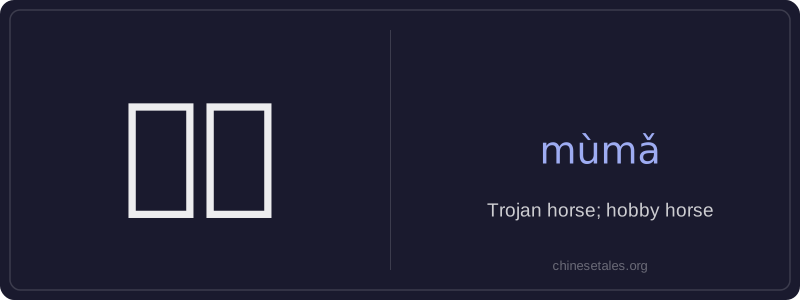
‘木马’ literally means ‘wooden horse’—combining 木 (mù, ‘wood’) and 马 (mǎ, ‘horse’). Historically, it refers to the ancient Greek Trojan horse, a deceptive military tactic, and in modern Chinese, it’s widely used as the standard term for a ‘Trojan horse’ computer virus: malicious software disguised as legitimate programs. The word retains its literal sense too, especially in children’s contexts, where it denotes a hobby horse—a toy or game prop, often made of wood or other materials, that children straddle and pretend to ride.
Though both meanings share the same characters and pronunciation, context determines interpretation: technical discussions about cybersecurity almost always mean the malware, while descriptions of playgrounds, festivals, or childhood games usually refer to the physical toy. Unlike English, Chinese doesn’t use separate terms for these two senses—the same word covers both, relying entirely on situational cues.
Example Sentences
Related Words
国语
‘Guó yǔ’ literally means 'national language'—
无论谁
‘无论谁’ (wú lùn shéi) is a pronoun meaning
外语
‘外语’ literally means ‘outside language’ —
面条
‘面条’ (miàn tiáo) literally means ‘flour str
不对
不对 (bù duì) literally combines 不 (bù), meani
认为
‘认为’ (rèn wéi) is a transitive verb meaning
认同
‘认同’ (tóng rèn) is a verb meaning ‘to ident
违规
违规 (wéi guī) literally means 'to violate rules