Word Explanation
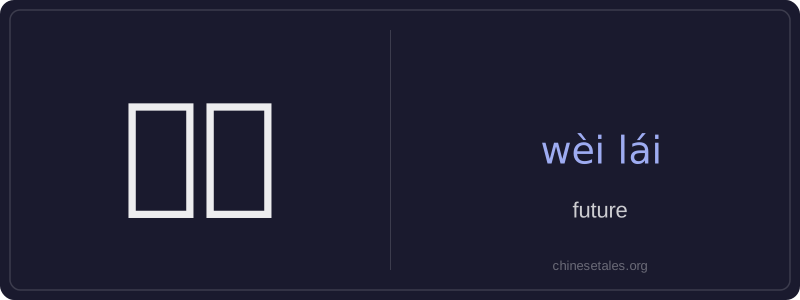
未来 (wèi lái) literally means 'not yet come' — 未 (wèi) means 'not yet' or 'not', and 来 (lái) means 'to come'. Together, they form a noun meaning 'the future': the time period that has not yet arrived. It refers to events, conditions, or possibilities beyond the present moment, often used in discussions about plans, predictions, technology, society, or personal aspirations.
This word is neutral in register and appears frequently in both spoken and written Chinese — from casual conversations ('What will you do in the future?') to formal contexts like news reports and policy documents. Unlike some time-related terms, 未来 does not specify duration; it can refer to tomorrow, next year, or centuries ahead, depending on context. It commonly pairs with measure words like 个 (e.g., 一个未来) or functions directly as a subject/object (e.g., 未来很光明). It may also appear in compound words like 未来发展 (future development) or 未来世界 (future world).
Example Sentences
Related Words
国语
‘Guó yǔ’ literally means 'national language'—
无论谁
‘无论谁’ (wú lùn shéi) is a pronoun meaning
外语
‘外语’ literally means ‘outside language’ —
面条
‘面条’ (miàn tiáo) literally means ‘flour str
不对
不对 (bù duì) literally combines 不 (bù), meani
认为
‘认为’ (rèn wéi) is a transitive verb meaning
认同
‘认同’ (tóng rèn) is a verb meaning ‘to ident
违规
违规 (wéi guī) literally means 'to violate rules