Word Explanation
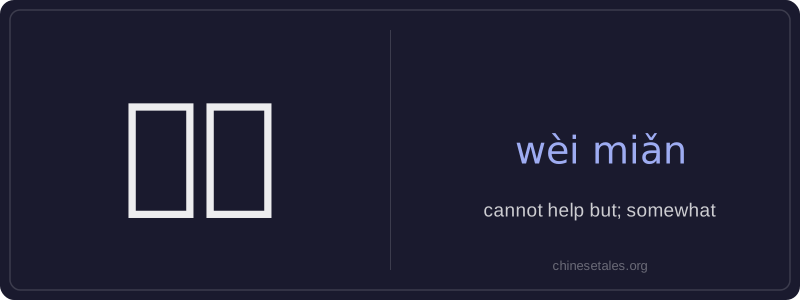
未免 is an adverb meaning 'cannot help but' or 'somewhat,' used to express mild criticism, doubt, or reservation about something—often implying that a situation seems excessive, unreasonable, or slightly inappropriate. Literally, 未 means 'not yet' or 'not,' and 免 means 'to avoid' or 'to escape'; together, 未免 conveys the sense of 'cannot avoid (feeling/thinking this way)' — hence its subjective, evaluative tone. It typically appears before an adjective or verb phrase and adds nuance of gentle disapproval or hesitation.
This expression is common in spoken and written Chinese, especially in formal or semi-formal contexts like essays, discussions, or thoughtful speech. It’s rarely used in casual texting or slang, and never stands alone — it always modifies a predicate. Because it carries subtle judgment, speakers use it carefully to soften criticism without sounding harsh. It often pairs with words like 太 (too), 有点 (a bit), or 过于 (excessively) to reinforce degree.
Example Sentences
Related Words
国语
‘Guó yǔ’ literally means 'national language'—
无论谁
‘无论谁’ (wú lùn shéi) is a pronoun meaning
外语
‘外语’ literally means ‘outside language’ —
面条
‘面条’ (miàn tiáo) literally means ‘flour str
不对
不对 (bù duì) literally combines 不 (bù), meani
认为
‘认为’ (rèn wéi) is a transitive verb meaning
认同
‘认同’ (tóng rèn) is a verb meaning ‘to ident
违规
违规 (wéi guī) literally means 'to violate rules