Word Explanation
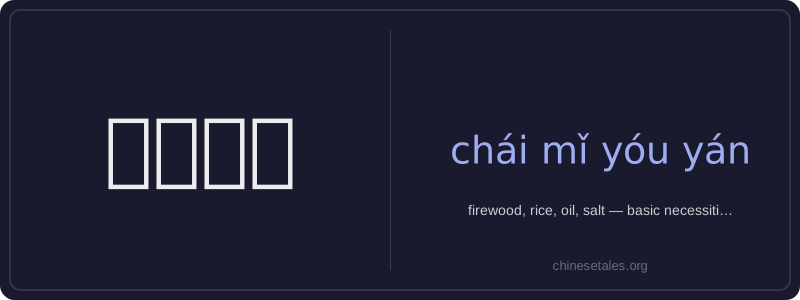
Chái mǐ yóu yán literally means 'firewood, rice, oil, and salt' — the four most basic household necessities in traditional Chinese daily life. Though firewood is no longer commonly used for cooking in modern urban settings, the phrase endures as a fixed idiom representing mundane, practical concerns of everyday survival and domestic life. It evokes the ordinary, unglamorous work of maintaining a home: shopping, cooking, budgeting, and caring for family.
The term is often used contrastively with loftier or more abstract pursuits — such as art, philosophy, romance, or ambition — to highlight the tension between idealism and material reality. It appears frequently in literature, film, and conversation when describing middle-aged responsibilities, marital compromises, or the gradual shift from youthful dreams to adult pragmatism. As a collective noun, it is always plural in sense and functions as an uncountable noun in grammar.
Example Sentences
Related Words
国语
‘Guó yǔ’ literally means 'national language'—
无论谁
‘无论谁’ (wú lùn shéi) is a pronoun meaning
外语
‘外语’ literally means ‘outside language’ —
面条
‘面条’ (miàn tiáo) literally means ‘flour str
不对
不对 (bù duì) literally combines 不 (bù), meani
认为
‘认为’ (rèn wéi) is a transitive verb meaning
认同
‘认同’ (tóng rèn) is a verb meaning ‘to ident
违规
违规 (wéi guī) literally means 'to violate rules