Word Explanation
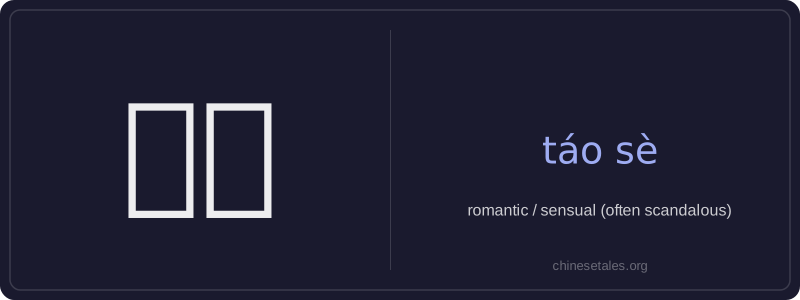
‘桃色’ (táo sè) literally combines ‘peach’ (桃) and ‘color’ (色), evoking the soft pink hue of peach blossoms — a traditional symbol of romance, youth, and sensual allure in Chinese culture. Historically, peaches represent longevity and vitality, but their delicate pink tone also carries connotations of budding love, flirtation, and emotional intensity.
In modern usage, ‘桃色’ most often describes romantic or sensual matters — especially those tinged with scandal, gossip, or impropriety (e.g., affairs, celebrity rumors, or workplace flirtations). It’s rarely neutral: even when used lightly, it implies emotional heat, secrecy, or social sensitivity. You’ll commonly see it in compound nouns like 桃色新闻 (scandalous news) or 桃色事件 (romantic scandal), where it functions as a descriptive modifier rather than a standalone noun.
Example Sentences
Related Words
国语
‘Guó yǔ’ literally means 'national language'—
无论谁
‘无论谁’ (wú lùn shéi) is a pronoun meaning
外语
‘外语’ literally means ‘outside language’ —
面条
‘面条’ (miàn tiáo) literally means ‘flour str
不对
不对 (bù duì) literally combines 不 (bù), meani
认为
‘认为’ (rèn wéi) is a transitive verb meaning
认同
‘认同’ (tóng rèn) is a verb meaning ‘to ident
违规
违规 (wéi guī) literally means 'to violate rules