Word Explanation
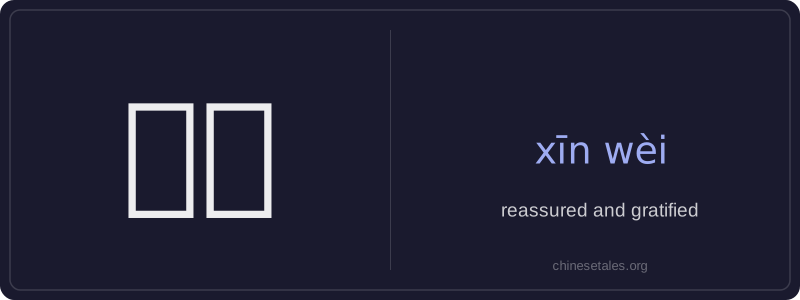
欣慰 is an adjective meaning 'reassured and gratified' — a warm, quiet joy mixed with relief, often arising when something good happens after concern or effort. The first character 欣 (xīn) means 'joyful' or 'pleased', while 慰 (wèi) means 'to comfort' or 'to console'; together, they express the emotional state of being both comforted and uplifted — as when a parent sees their child succeed after hardship, or a teacher observes a struggling student finally grasp a difficult concept.
This word carries a gentle, mature tone and is commonly used in written Chinese and formal speech. It rarely appears in casual conversation among young people, who might prefer simpler terms like 高兴 (gāoxìng) or 开心 (kāixīn). 欣慰 typically follows subjects expressing care or investment — parents, teachers, mentors, or even society at large — and often appears with verbs like 感到 (gǎndào), 觉得 (juéde), or 看到…感到 (kàndào…gǎndào).
Example Sentences
Related Words
国语
‘Guó yǔ’ literally means 'national language'—
无论谁
‘无论谁’ (wú lùn shéi) is a pronoun meaning
外语
‘外语’ literally means ‘outside language’ —
面条
‘面条’ (miàn tiáo) literally means ‘flour str
认同
‘认同’ (tóng rèn) is a verb meaning ‘to ident
不对
不对 (bù duì) literally combines 不 (bù), meani
认为
‘认为’ (rèn wéi) is a transitive verb meaning
违规
违规 (wéi guī) literally means 'to violate rules