Word Explanation
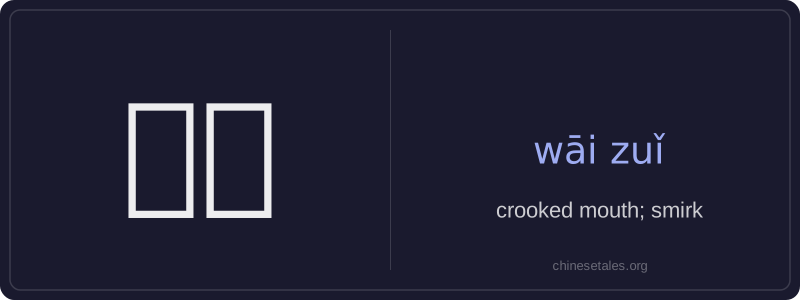
'歪嘴' literally means 'crooked mouth' — combining 歪 (wāi), meaning 'askew', 'twisted', or 'not straight', and 嘴 (zuǐ), meaning 'mouth'. It describes a facial expression where the mouth is deliberately or involuntarily pulled to one side, often conveying sarcasm, mockery, disdain, or wry amusement. Unlike neutral terms like 'smile' or 'frown', 歪嘴 carries strong emotional nuance and is usually intentional, signaling irony or quiet ridicule.
This expression appears frequently in informal speech, online commentary, and descriptive writing — especially when portraying someone’s sardonic or self-satisfied reaction. It’s rarely used in formal contexts or medical descriptions (where terms like 'facial asymmetry' would apply). While it can describe a physical condition (e.g., due to nerve damage), its dominant usage is figurative and emotionally charged, highlighting attitude over anatomy.
Example Sentences
Related Words
国语
‘Guó yǔ’ literally means 'national language'—
无论谁
‘无论谁’ (wú lùn shéi) is a pronoun meaning
外语
‘外语’ literally means ‘outside language’ —
面条
‘面条’ (miàn tiáo) literally means ‘flour str
认同
‘认同’ (tóng rèn) is a verb meaning ‘to ident
不对
不对 (bù duì) literally combines 不 (bù), meani
认为
‘认为’ (rèn wéi) is a transitive verb meaning
违规
违规 (wéi guī) literally means 'to violate rules