Word Explanation
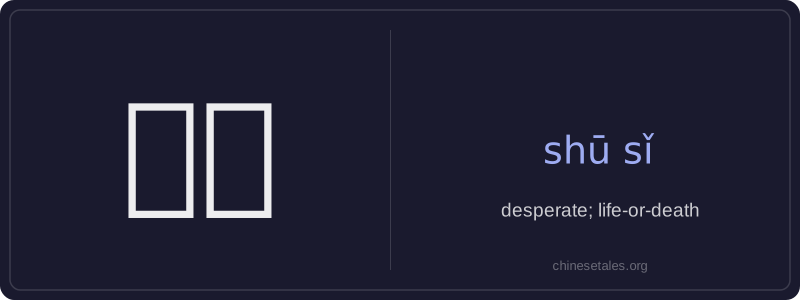
殊死 (shū sǐ) is an adjective meaning 'desperate' or 'life-or-death', describing a situation, struggle, or effort where survival or total defeat is at stake. The character 殊 originally meant 'different' or 'extraordinary', and in classical usage evolved to imply 'extreme' or 'exceptional'; 死 means 'death'. Together, they form a compound that conveys extremity — not merely 'serious', but literally 'to the point of death'. It’s often used in formal, literary, or historical contexts, especially when describing battles, crises, or intense personal efforts.
This term carries strong emotional weight and gravitas; it's rarely used in casual speech. You’ll encounter it in historical narratives, political rhetoric, military reports, or dramatic literature. While it can modify nouns (e.g., 殊死搏斗), it frequently appears in set phrases like 殊死一战 ('a do-or-die battle') or 殊死抵抗 ('desperate resistance'). Its tone is solemn and urgent, evoking high stakes and unwavering resolve.
Example Sentences
Related Words
国语
‘Guó yǔ’ literally means 'national language'—
无论谁
‘无论谁’ (wú lùn shéi) is a pronoun meaning
外语
‘外语’ literally means ‘outside language’ —
面条
‘面条’ (miàn tiáo) literally means ‘flour str
认同
‘认同’ (tóng rèn) is a verb meaning ‘to ident
不对
不对 (bù duì) literally combines 不 (bù), meani
认为
‘认为’ (rèn wéi) is a transitive verb meaning
违规
违规 (wéi guī) literally means 'to violate rules