Word Explanation
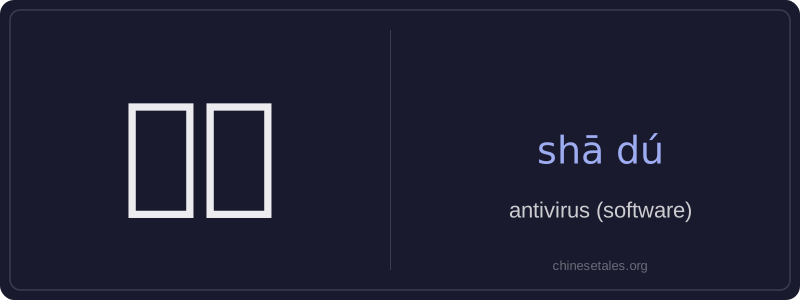
'Shādú' literally means 'to kill poison'—'shā' (kill) and 'dú' (poison, toxin, or virus)—and is the standard Chinese term for antivirus software. Though it sounds violent, it’s a common, neutral technical compound used in computing contexts to refer to programs designed to detect, block, and remove malicious software like viruses, worms, and trojans.
The word reflects a metaphorical extension of 'poison' to digital threats: just as poison harms the body, malware harms computer systems. It appears in product names (e.g., 360杀毒), system notifications, and everyday tech discussions. Unlike English 'antivirus', which emphasizes prevention, 杀毒 emphasizes active removal—hence its strong verb-based root—but functions grammatically as a noun in modern usage (e.g., 'install antivirus'). It’s rarely used outside computing; you wouldn’t say it for biological toxins or medical treatment.
Example Sentences
Related Words
国语
‘Guó yǔ’ literally means 'national language'—
无论谁
‘无论谁’ (wú lùn shéi) is a pronoun meaning
外语
‘外语’ literally means ‘outside language’ —
面条
‘面条’ (miàn tiáo) literally means ‘flour str
认同
‘认同’ (tóng rèn) is a verb meaning ‘to ident
不对
不对 (bù duì) literally combines 不 (bù), meani
认为
‘认为’ (rèn wéi) is a transitive verb meaning
违规
违规 (wéi guī) literally means 'to violate rules