Word Explanation
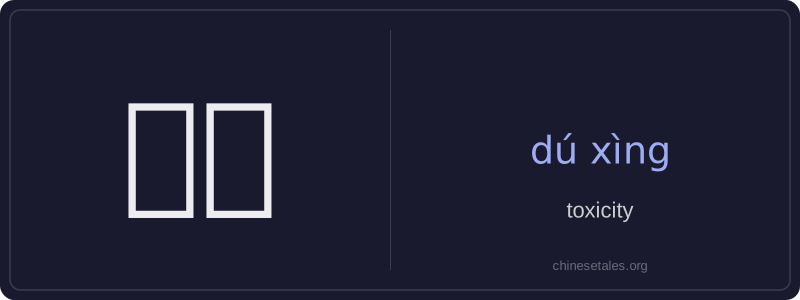
‘毒性’ (dú xìng) is a noun meaning ‘toxicity’—the degree to which a substance can harm living organisms. It combines 毒 (dú), meaning ‘poison’ or ‘toxin’, and 性 (xìng), a suffix meaning ‘nature’ or ‘property’. Together, they literally mean ‘the nature/property of being poisonous’. This word is commonly used in medical, scientific, and environmental contexts—for example, when discussing drug safety, pesticide effects, or pollution risks.
Unlike the standalone character 毒, which can refer to poison, drugs, or even metaphorical harm (e.g., 毒品 ‘narcotics’), 毒性 specifically denotes the measurable biological effect of a toxic agent. It often appears with modifiers like 高 (gāo, ‘high’), 低 (dī, ‘low’), or 无 (wú, ‘none’) to indicate severity: e.g., 高毒性 means ‘highly toxic’. It’s rarely used in casual speech but frequently appears in warnings, research reports, and public health information.
Example Sentences
Related Words
国语
‘Guó yǔ’ literally means 'national language'—
无论谁
‘无论谁’ (wú lùn shéi) is a pronoun meaning
外语
‘外语’ literally means ‘outside language’ —
面条
‘面条’ (miàn tiáo) literally means ‘flour str
认同
‘认同’ (tóng rèn) is a verb meaning ‘to ident
不对
不对 (bù duì) literally combines 不 (bù), meani
认为
‘认为’ (rèn wéi) is a transitive verb meaning
违规
违规 (wéi guī) literally means 'to violate rules