Word Explanation
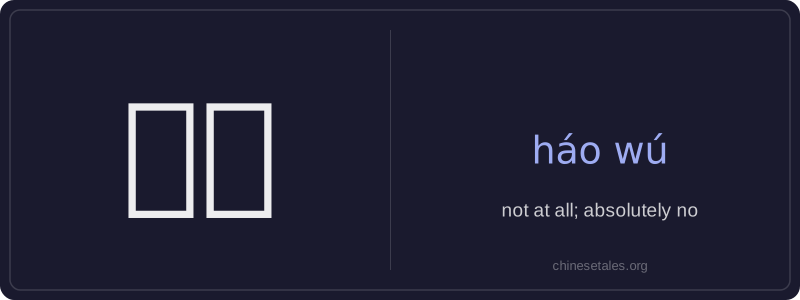
毫無 (háo wú) is an adverbial phrase meaning 'not at all' or 'absolutely no', used to emphasize complete absence or total lack of something—whether a quality, feeling, evidence, intention, or result. The character 毫 (háo) literally means 'a tiny hair' and functions here as an intensifier meaning 'the slightest'; 無 (wú) means 'to have none' or 'without'. Together, they form a fixed, emphatic expression indicating zero degree—stronger than just 不 (bù) or 没 (méi). It always precedes a noun, verb, or adjective and cannot stand alone.
This phrase is common in formal writing, news reports, and serious spoken contexts—for instance, when denying rumors ('毫無根據'), expressing indifference ('毫無興趣'), or rejecting responsibility ('毫無關係'). It carries a neutral-to-formal register and is rarely used in casual conversation among friends, where simpler alternatives like 一點兒也不 (yìdiǎnr yě bù) are preferred. Learners should note that 毫無 must be followed directly by the thing being denied—no particle like 的 is inserted between them.
Example Sentences
Related Words
国语
‘Guó yǔ’ literally means 'national language'—
无论谁
‘无论谁’ (wú lùn shéi) is a pronoun meaning
外语
‘外语’ literally means ‘outside language’ —
面条
‘面条’ (miàn tiáo) literally means ‘flour str
认同
‘认同’ (tóng rèn) is a verb meaning ‘to ident
不对
不对 (bù duì) literally combines 不 (bù), meani
认为
‘认为’ (rèn wéi) is a transitive verb meaning
违规
违规 (wéi guī) literally means 'to violate rules