Word Explanation
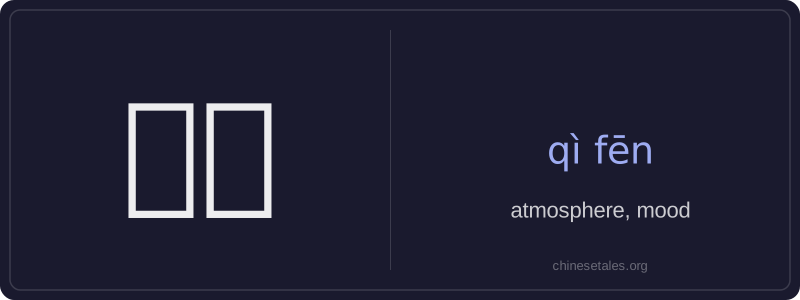
‘气氛’ (qì fēn) literally combines ‘气’ (qì), meaning ‘air,’ ‘breath,’ or ‘energy,’ and ‘氛’ (fēn), meaning ‘vapor,’ ‘mist,’ or ‘aura.’ Together, they evoke an intangible, ambient quality — the collective emotional or psychological tone of a place, event, or interaction. It’s not about physical air but rather the shared feeling that permeates a situation: whether warm and welcoming, tense and awkward, solemn and respectful, or festive and lively.
This noun is commonly used to describe social settings — classrooms, meetings, family dinners, celebrations, or even online discussions. Unlike English ‘atmosphere,’ which can refer to planetary air, ‘气氛’ is almost always socio-emotional in Chinese. It’s often modified by adjectives like ‘轻松的’ (relaxed), ‘紧张的’ (tense), ‘热烈的’ (enthusiastic), or ‘严肃的’ (serious), and frequently appears with verbs like ‘营造’ (to create), ‘活跃’ (to liven up), or ‘改变’ (to change).
Example Sentences
Related Words
国语
‘Guó yǔ’ literally means 'national language'—
无论谁
‘无论谁’ (wú lùn shéi) is a pronoun meaning
外语
‘外语’ literally means ‘outside language’ —
面条
‘面条’ (miàn tiáo) literally means ‘flour str
认同
‘认同’ (tóng rèn) is a verb meaning ‘to ident
不对
不对 (bù duì) literally combines 不 (bù), meani
认为
‘认为’ (rèn wéi) is a transitive verb meaning
违规
违规 (wéi guī) literally means 'to violate rules