Word Explanation
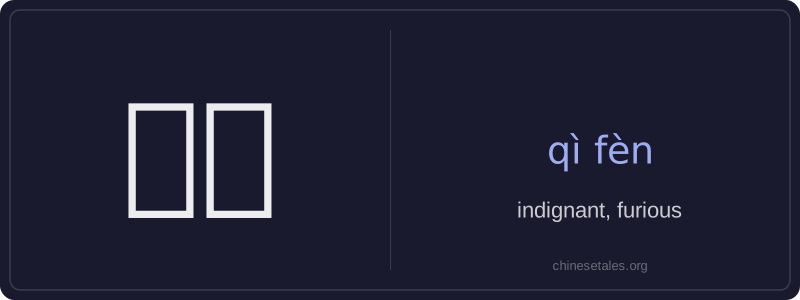
气愤 (qì fèn) is an adjective meaning 'indignant' or 'furious'—a strong emotional reaction to something perceived as unfair, unjust, or offensive. Literally, 气 means 'qi' or 'vital energy', but here it conveys emotional agitation; 愤 means 'anger' or 'resentment'. Together, they emphasize righteous anger rooted in moral disapproval—not mere irritation or annoyance, but a heated, principled response to wrongdoing.
This word is commonly used in formal and semi-formal contexts: news reports, essays, discussions about social issues, or personal accounts of injustice. It often appears with verbs like 感到 (feel), 表示 (express), or 显得 (appear), and frequently modifies nouns like 情绪 (emotion) or 态度 (attitude). While it can describe intense anger, it carries a nuance of legitimacy—the speaker believes their anger is justified by the situation.
Example Sentences
Related Words
国语
‘Guó yǔ’ literally means 'national language'—
无论谁
‘无论谁’ (wú lùn shéi) is a pronoun meaning
外语
‘外语’ literally means ‘outside language’ —
面条
‘面条’ (miàn tiáo) literally means ‘flour str
认同
‘认同’ (tóng rèn) is a verb meaning ‘to ident
不对
不对 (bù duì) literally combines 不 (bù), meani
认为
‘认为’ (rèn wéi) is a transitive verb meaning
违规
违规 (wéi guī) literally means 'to violate rules