Word Explanation
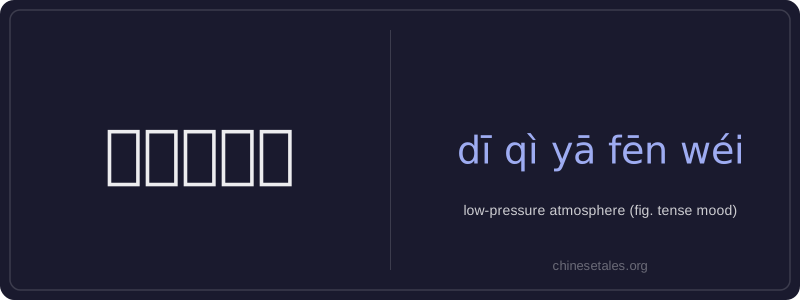
'Low-pressure atmosphere' (dī qì yā fēn wéi) is a figurative expression borrowing meteorological terminology to describe a palpably tense, uneasy, or oppressive social mood — like the heavy stillness before a storm. Literally, 低 means 'low', 气压 means 'air pressure', and 氛围 means 'atmosphere' or 'mood'; together, they evoke a psychological weight rather than actual weather. It’s commonly used in spoken and written Chinese to describe group dynamics where people feel constrained, anxious, or reluctant to speak freely — for example, during a difficult family discussion or after a workplace mistake.
This phrase carries a slightly literary or expressive tone and appears frequently in journalism, literature, and everyday commentary on interpersonal or organizational climates. Unlike neutral terms like 气氛 (qìfēn, 'atmosphere'), 低气压氛围 implies negativity and emotional strain. It’s not used for physical weather conditions — for that, you’d say 低压天气 (dīyā tiānqì). The phrase functions as a noun and typically follows verbs like 营造 (yíngzào, 'to create'), 感受到 (gǎnshòu dào, 'to feel'), or 形成 (xíngchéng, 'to form').
Example Sentences
Related Words
国语
‘Guó yǔ’ literally means 'national language'—
无论谁
‘无论谁’ (wú lùn shéi) is a pronoun meaning
外语
‘外语’ literally means ‘outside language’ —
面条
‘面条’ (miàn tiáo) literally means ‘flour str
认同
‘认同’ (tóng rèn) is a verb meaning ‘to ident
不对
不对 (bù duì) literally combines 不 (bù), meani
认为
‘认为’ (rèn wéi) is a transitive verb meaning
违规
违规 (wéi guī) literally means 'to violate rules