Word Explanation
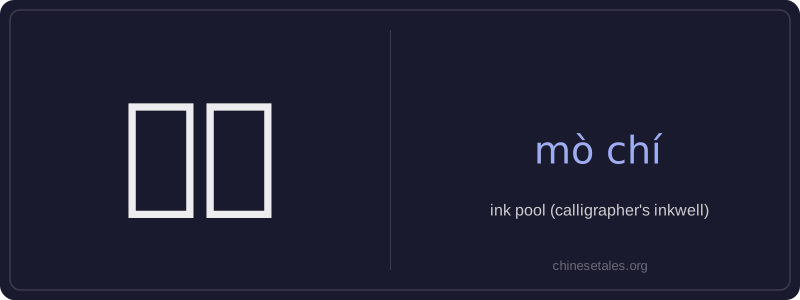
"墨池" (mò chí) literally means "ink pool" — a traditional inkwell used by Chinese calligraphers and painters to hold liquid ink. The character 墨 (mò) means "ink," especially the solid ink stick ground with water, while 池 (chí) means "pool" or "pond," evoking a small, shallow container that holds ink like a miniature reservoir. Historically, many famous calligraphers, such as Wang Xizhi of the Eastern Jin dynasty, were said to have practiced so intensively that they turned their washing pools black with ink residue — giving rise to poetic references to "ink pools" as symbols of dedication and mastery.
Today, 墨池 is used both literally (to refer to an actual inkwell in classical art practice) and figuratively (in literary or idiomatic contexts), often appearing in poetry, essays, or museum descriptions about calligraphy culture. It carries strong cultural connotations of scholarly discipline, artistic tradition, and quiet contemplation — not merely a functional object, but a meaningful artifact in Chinese literati life.
Example Sentences
Related Words
国语
‘Guó yǔ’ literally means 'national language'—
无论谁
‘无论谁’ (wú lùn shéi) is a pronoun meaning
外语
‘外语’ literally means ‘outside language’ —
面条
‘面条’ (miàn tiáo) literally means ‘flour str
认同
‘认同’ (tóng rèn) is a verb meaning ‘to ident
不对
不对 (bù duì) literally combines 不 (bù), meani
认为
‘认为’ (rèn wéi) is a transitive verb meaning
违规
违规 (wéi guī) literally means 'to violate rules