Word Explanation
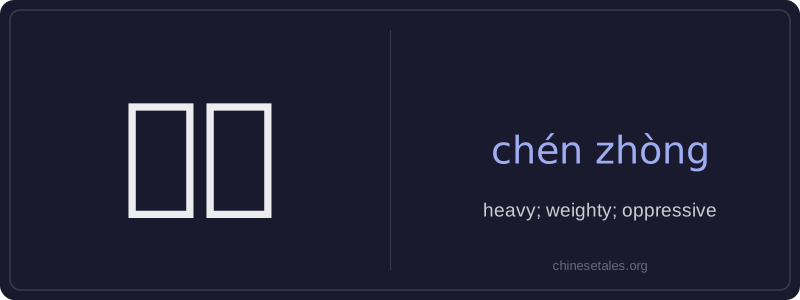
沉重 (chén zhòng) is an adjective meaning 'heavy' in both physical and figurative senses. Literally, 沉 means 'to sink' or 'heavy in weight', and 重 means 'weighty' or 'serious' — together they intensify the sense of heaviness, often implying difficulty, burden, or emotional gravity. Unlike simple physical weight (e.g., 重 zhòng alone), 沉重 carries connotations of oppression, seriousness, or emotional strain.
This word frequently describes abstract burdens: a heavy heart, oppressive silence, serious consequences, or overwhelming grief. It’s common in formal writing and speech — news reports, literature, and psychological contexts — but rarely used for everyday objects unless emphasizing emotional weight (e.g., 'a heavy silence'). It does not function as a noun or verb; it always modifies nouns or predicates adjectivally, often with 的 when preceding a noun (e.g., 沉重的压力). It’s never used for light, neutral, or positive weight.
Example Sentences
Related Words
国语
‘Guó yǔ’ literally means 'national language'—
无论谁
‘无论谁’ (wú lùn shéi) is a pronoun meaning
外语
‘外语’ literally means ‘outside language’ —
面条
‘面条’ (miàn tiáo) literally means ‘flour str
认同
‘认同’ (tóng rèn) is a verb meaning ‘to ident
不对
不对 (bù duì) literally combines 不 (bù), meani
认为
‘认为’ (rèn wéi) is a transitive verb meaning
违规
违规 (wéi guī) literally means 'to violate rules