Word Explanation
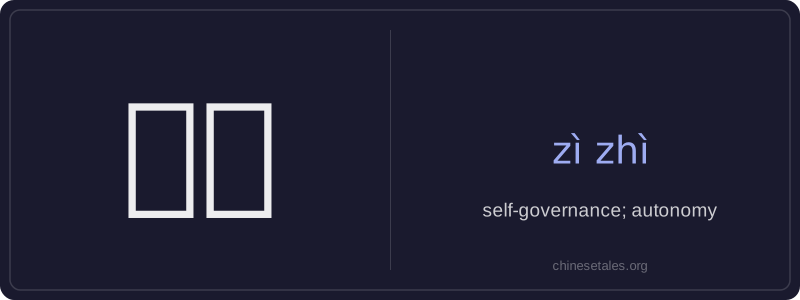
‘自治’ (zì zhì) literally means ‘self-governance’: ‘自’ (zì) means ‘self’ or ‘one’s own’, and ‘治’ (zhì) means ‘to govern’, ‘to administer’, or ‘to manage’. Together, they form a formal noun denoting the right or practice of a group—such as an ethnic minority, region, or organization—to manage its own internal affairs independently, within a larger national framework. It emphasizes local decision-making authority without external interference.
This term is most commonly used in political, administrative, and legal contexts—for example, in China’s system of regional ethnic autonomy, where designated areas like the Tibet Autonomous Region or Inner Mongolia Autonomous Region exercise self-governance under the Constitution. It can also appear in organizational contexts (e.g., university student unions exercising ‘student self-governance’), though such usage is less frequent and more metaphorical. The word carries a formal, institutional tone and rarely appears in casual speech.
Example Sentences
Related Words
国语
‘Guó yǔ’ literally means 'national language'—
无论谁
‘无论谁’ (wú lùn shéi) is a pronoun meaning
外语
‘外语’ literally means ‘outside language’ —
面条
‘面条’ (miàn tiáo) literally means ‘flour str
认同
‘认同’ (tóng rèn) is a verb meaning ‘to ident
不对
不对 (bù duì) literally combines 不 (bù), meani
认为
‘认为’ (rèn wéi) is a transitive verb meaning
违规
违规 (wéi guī) literally means 'to violate rules