Word Explanation
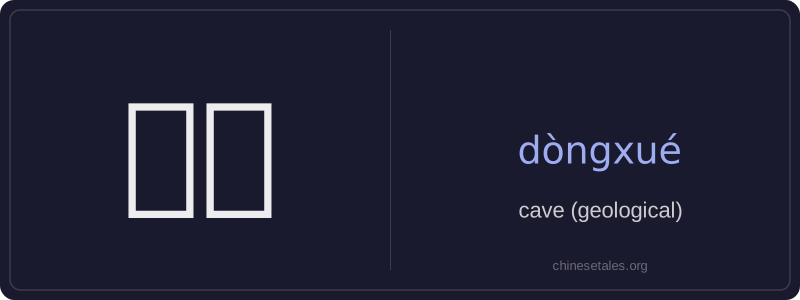
洞穴 (dòngxué) is a compound noun meaning 'cave'—a natural underground hollow or passage formed in rock, typically by water erosion over long periods. The first character, 洞 (dòng), means 'hole' or 'cavity', suggesting openness and depth; the second, 穴 (xué), means 'cavity', 'burrow', or 'den', often implying a sheltered, enclosed space. Together, they emphasize a geological feature that is both spacious and secluded—distinct from man-made holes (e.g., 隧道 suìdào, 'tunnel') or small crevices (e.g., 缝隙 fèngxì, 'crack').
This word is used primarily in scientific, geographical, or descriptive contexts—such as cave exploration (洞穴探险 dòngxué tànxǐan), karst landscapes, or paleontological sites. It carries a neutral, formal register and appears frequently in textbooks, documentaries, and travel writing about natural landmarks. While it can occasionally refer metaphorically to hidden or mysterious places, its core meaning remains strictly geological and physical.
Example Sentences
Related Words
国语
‘Guó yǔ’ literally means 'national language'—
无论谁
‘无论谁’ (wú lùn shéi) is a pronoun meaning
外语
‘外语’ literally means ‘outside language’ —
面条
‘面条’ (miàn tiáo) literally means ‘flour str
认同
‘认同’ (tóng rèn) is a verb meaning ‘to ident
不对
不对 (bù duì) literally combines 不 (bù), meani
认为
‘认为’ (rèn wéi) is a transitive verb meaning
违规
违规 (wéi guī) literally means 'to violate rules