Word Explanation
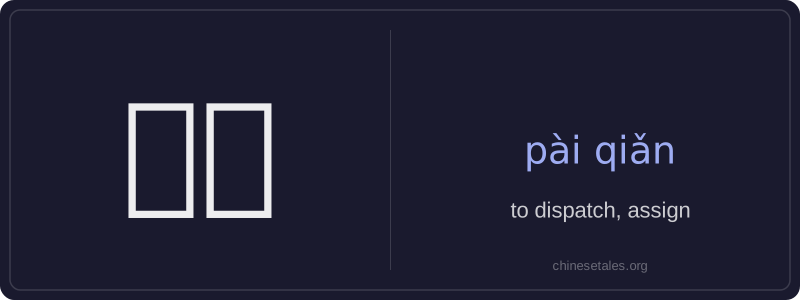
派遣 means 'to dispatch' or 'to assign', typically referring to sending someone—especially an employee, representative, or official—to a specific location or task. The character 派 (pài) conveys the idea of 'sending out', 'assigning', or 'dispatching', while 遣 (qiǎn) reinforces this meaning with its core sense of 'to send off' or 'to commission'. Together, they form a formal, often administrative or organizational verb used in contexts like business, diplomacy, education, or military operations.
This word is commonly used when describing institutional decisions—for example, assigning staff to overseas branches, deploying experts to disaster zones, or sending teachers to rural schools. It implies authority and intentionality: the subject doing the dispatching holds responsibility or decision-making power. While grammatically transitive, it’s rarely used in casual speech; instead, it appears in official documents, news reports, and workplace communication. It’s not used for everyday personal actions (e.g., you wouldn’t say 'I dispatched my friend to buy coffee').
Example Sentences
Related Words
国语
‘Guó yǔ’ literally means 'national language'—
无论谁
‘无论谁’ (wú lùn shéi) is a pronoun meaning
外语
‘外语’ literally means ‘outside language’ —
面条
‘面条’ (miàn tiáo) literally means ‘flour str
认同
‘认同’ (tóng rèn) is a verb meaning ‘to ident
不对
不对 (bù duì) literally combines 不 (bù), meani
认为
‘认为’ (rèn wéi) is a transitive verb meaning
违规
违规 (wéi guī) literally means 'to violate rules