Word Explanation
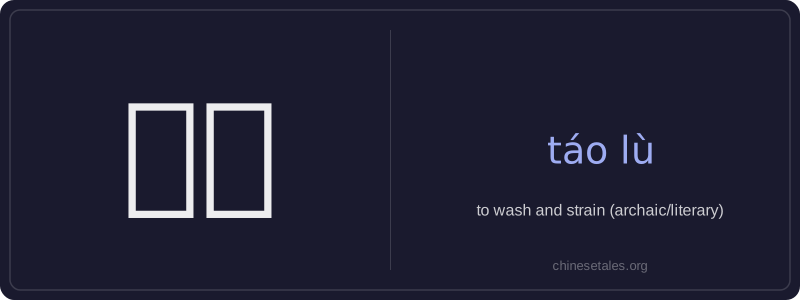
淘漉 (táo lù) is a classical two-character verb meaning 'to wash and strain'—typically referring to the process of rinsing fine particles (like sand, grain, or medicinal herbs) in water and then filtering out impurities. The first character 淘 means 'to wash away sediment by agitating in water', evoking the motion of sifting; the second character 漉 means 'to drain or strain through a filter or sieve'. Together, they describe a meticulous, often labor-intensive purification process rooted in traditional agriculture, apothecary practice, and metallurgy.
Though rare in modern spoken Chinese, 淘漉 appears in historical texts, poetic descriptions of rural life, and classical recipes—especially when preparing animal-derived medicines (e.g., washing and straining crushed insect parts) or cleaning animal feed. Its tone is formal and literary; learners will encounter it mainly in reading classical prose or specialized historical or medical contexts—not in daily conversation.
Example Sentences
Related Words
国语
‘Guó yǔ’ literally means 'national language'—
无论谁
‘无论谁’ (wú lùn shéi) is a pronoun meaning
外语
‘外语’ literally means ‘outside language’ —
面条
‘面条’ (miàn tiáo) literally means ‘flour str
认同
‘认同’ (tóng rèn) is a verb meaning ‘to ident
不对
不对 (bù duì) literally combines 不 (bù), meani
认为
‘认为’ (rèn wéi) is a transitive verb meaning
违规
违规 (wéi guī) literally means 'to violate rules