Word Explanation
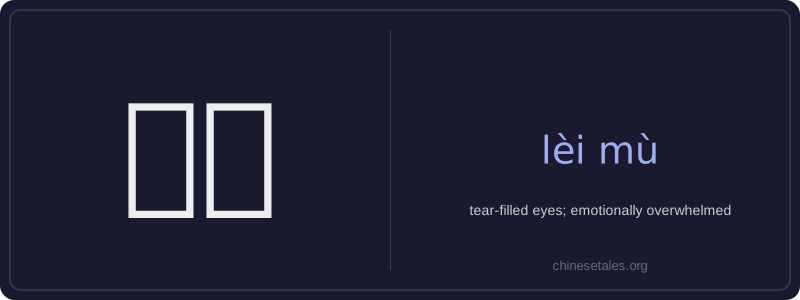
"Lèi mù" literally means "tear-filled eyes"—combining 泪 (lèi, "tear") and 目 (mù, "eye" or "eyes"). Though composed of two concrete nouns, it functions idiomatically as a noun describing an emotional state: the visible physical sign of being deeply moved, touched, or overwhelmed—often by something heartwarming, sad, nostalgic, or inspiring. It’s not about crying uncontrollably, but rather the tender, tear-glistening moment just before or during quiet emotion.
This term is widely used in informal digital communication—especially on social media, forums, and comment sections—to express empathetic resonance. It carries warmth and sincerity, rarely irony or sarcasm. Unlike formal literary terms for weeping, 泪目 is colloquial, concise, and emotionally immediate, often appearing after descriptions of moving events, reunions, acts of kindness, or personal triumphs.
Example Sentences
Related Words
国语
‘Guó yǔ’ literally means 'national language'—
无论谁
‘无论谁’ (wú lùn shéi) is a pronoun meaning
外语
‘外语’ literally means ‘outside language’ —
面条
‘面条’ (miàn tiáo) literally means ‘flour str
认同
‘认同’ (tóng rèn) is a verb meaning ‘to ident
不对
不对 (bù duì) literally combines 不 (bù), meani
认为
‘认为’ (rèn wéi) is a transitive verb meaning
违规
违规 (wéi guī) literally means 'to violate rules