Word Explanation
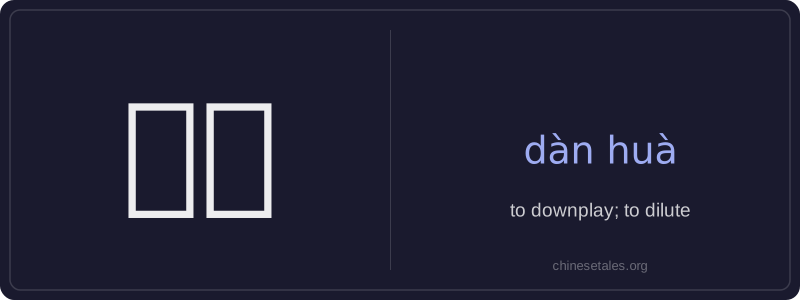
淡化 (dàn huà) is a verb meaning 'to downplay' or 'to dilute' — literally, 'to make淡 (light, faint, weak) + 化 (to change, to transform)'. It describes the act of reducing the intensity, prominence, or emotional weight of something: an issue, a memory, a feeling, or a claim. The character 淡 conveys lightness or mildness, while 化 indicates transformation or process — together, they suggest gradually lessening significance or impact.
This word is commonly used in formal and semi-formal contexts: media reporting (e.g., downplaying controversy), psychology (e.g., reducing anxiety), education (e.g., softening rigid thinking), or interpersonal communication (e.g., easing tension). It often appears with objects like 矛盾 (conflict), 情绪 (emotions), 影响 (influence), or 记忆 (memories). Unlike casual terms like 'ignore' or 'forget', 淡化 implies intentional, gradual reduction — not elimination, but gentle attenuation.
Example Sentences
Related Words
国语
‘Guó yǔ’ literally means 'national language'—
无论谁
‘无论谁’ (wú lùn shéi) is a pronoun meaning
外语
‘外语’ literally means ‘outside language’ —
面条
‘面条’ (miàn tiáo) literally means ‘flour str
认同
‘认同’ (tóng rèn) is a verb meaning ‘to ident
不对
不对 (bù duì) literally combines 不 (bù), meani
认为
‘认为’ (rèn wéi) is a transitive verb meaning
违规
违规 (wéi guī) literally means 'to violate rules