Word Explanation
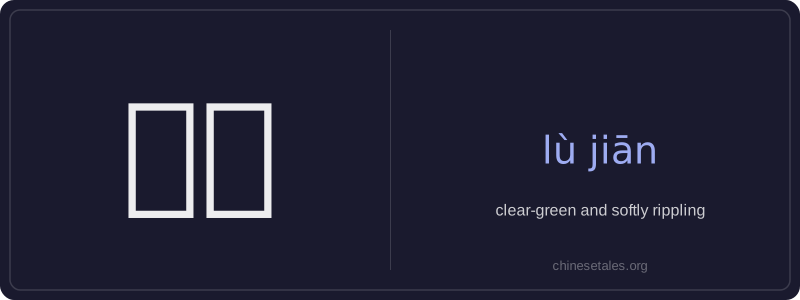
‘淥浅’ (lù jiān) is a poetic, literary adjective describing water that is both clear-green in color and gently rippling—like sunlight filtering through shallow, clean spring water with soft surface movement. The first character 淥 (lù) evokes limpid, green-tinged clarity (often used in classical poetry for pure, vivid water), while 浅 (jiān) here is an archaic reading meaning ‘shallow’ but contributes the sense of lightness, delicacy, and subtle motion—not depth or stillness. Together, they form a compact, sensory-rich descriptor emphasizing tranquility, natural purity, and gentle vitality.
This term appears almost exclusively in classical or modern literary Chinese—especially in nature writing, poetry, and landscape painting descriptions. It is not used in everyday speech or technical contexts. You’ll find it modifying nouns like 水 (water), 波 (ripples), or 潭 (pool), often to evoke serene, idyllic scenes of mountain streams, forest springs, or garden ponds. Its aesthetic weight makes it unsuitable for casual description or scientific reporting.
Example Sentences
Related Words
国语
‘Guó yǔ’ literally means 'national language'—
无论谁
‘无论谁’ (wú lùn shéi) is a pronoun meaning
外语
‘外语’ literally means ‘outside language’ —
面条
‘面条’ (miàn tiáo) literally means ‘flour str
认同
‘认同’ (tóng rèn) is a verb meaning ‘to ident
不对
不对 (bù duì) literally combines 不 (bù), meani
认为
‘认为’ (rèn wéi) is a transitive verb meaning
违规
违规 (wéi guī) literally means 'to violate rules