Word Explanation
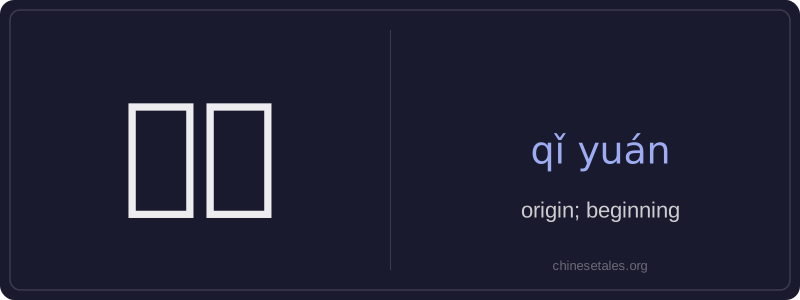
起源 (qǐ yuán) is a noun meaning 'origin' or 'beginning'—the point where something first comes into existence or starts developing. The character 起 (qǐ) means 'to rise', 'to begin', or 'to start', while 源 (yuán) means 'source' or 'fountainhead'; together, they literally evoke the image of something rising from its source. This word is commonly used in formal, academic, or descriptive contexts—especially when discussing the historical, biological, cultural, or geographical beginnings of phenomena.
You’ll often encounter 起源 in discussions about evolution, language development, customs, species, or natural features—for example, the origin of a river, a tradition, or a species. It’s rarely used in casual daily speech; instead, simpler alternatives like 开始 (kāishǐ, 'start') or 来源 (láiyuán, 'source') are preferred for everyday situations. 起源 carries a sense of depth and foundational importance, making it well-suited for explanations that emphasize roots and provenance.
Example Sentences
Related Words
国语
‘Guó yǔ’ literally means 'national language'—
无论谁
‘无论谁’ (wú lùn shéi) is a pronoun meaning
外语
‘外语’ literally means ‘outside language’ —
面条
‘面条’ (miàn tiáo) literally means ‘flour str
认同
‘认同’ (tóng rèn) is a verb meaning ‘to ident
不对
不对 (bù duì) literally combines 不 (bù), meani
认为
‘认为’ (rèn wéi) is a transitive verb meaning
违规
违规 (wéi guī) literally means 'to violate rules