Word Explanation
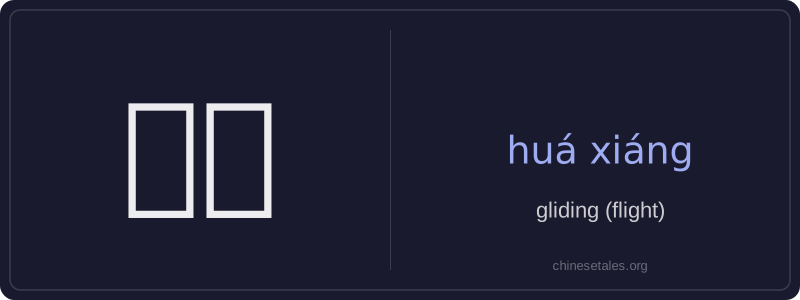
滑翔 (huá xiáng) literally combines 滑 (huá), meaning 'to slide' or 'to glide', and 翔 (xiáng), meaning 'to soar' or 'to fly gracefully'. Together, they describe unpowered flight — moving through the air without flapping wings or engine thrust, relying on air currents and aerodynamic lift. This term is commonly used for birds like eagles or albatrosses that extend their wings and ride thermal updrafts, as well as for human activities such as hang gliding or paragliding.
Unlike powered flight (飞行 fēi xíng), 滑翔 emphasizes passive, energy-efficient movement sustained by gravity and airflow. It often implies elegance, control, and harmony with natural forces. While technically applicable to aircraft or even falling objects under certain conditions, in everyday usage it carries a positive, almost poetic connotation — especially when describing animals or sports. The word appears frequently in nature documentaries, biology texts, and outdoor adventure contexts.
Example Sentences
Related Words
国语
‘Guó yǔ’ literally means 'national language'—
无论谁
‘无论谁’ (wú lùn shéi) is a pronoun meaning
外语
‘外语’ literally means ‘outside language’ —
面条
‘面条’ (miàn tiáo) literally means ‘flour str
认同
‘认同’ (tóng rèn) is a verb meaning ‘to ident
不对
不对 (bù duì) literally combines 不 (bù), meani
认为
‘认为’ (rèn wéi) is a transitive verb meaning
违规
违规 (wéi guī) literally means 'to violate rules