Word Explanation
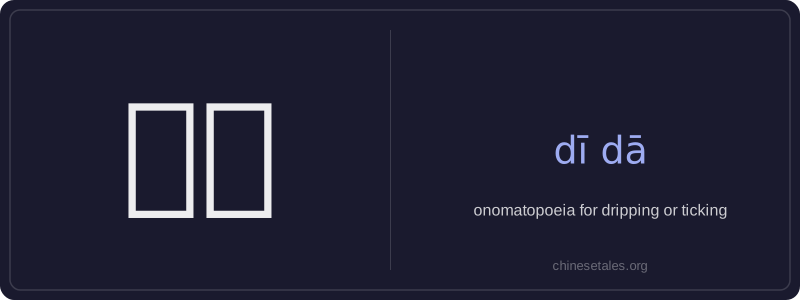
滴答 (dī dā) is an onomatopoeic word that imitates the soft, rhythmic sound of liquid dripping—like water from a leaky faucet—or the quiet, steady ticking of a mechanical clock. Each character contributes to the sound: 滴 represents the initial 'drip' (a heavier, falling sound), while 答 echoes the lighter, sharper 'tap' that follows. Together, they form a reduplicated, two-syllable sound pattern common in Chinese onomatopoeia, evoking regularity, slowness, and quiet persistence.
This word is most often used descriptively in literary or atmospheric contexts—to convey the passage of time, solitude, tension, or stillness—rather than in casual speech. It frequently appears in narratives, poetry, or descriptive writing, especially when emphasizing silence punctuated by small, repetitive sounds. While it can function as a noun (e.g., 'the drip-tap of the clock'), it may also serve as an interjection or adverbial phrase to set a mood ('滴答,滴答…' — 'Drip-tap… drip-tap…').
Example Sentences
Related Words
国语
‘Guó yǔ’ literally means 'national language'—
无论谁
‘无论谁’ (wú lùn shéi) is a pronoun meaning
外语
‘外语’ literally means ‘outside language’ —
面条
‘面条’ (miàn tiáo) literally means ‘flour str
认同
‘认同’ (tóng rèn) is a verb meaning ‘to ident
不对
不对 (bù duì) literally combines 不 (bù), meani
认为
‘认为’ (rèn wéi) is a transitive verb meaning
违规
违规 (wéi guī) literally means 'to violate rules