Word Explanation
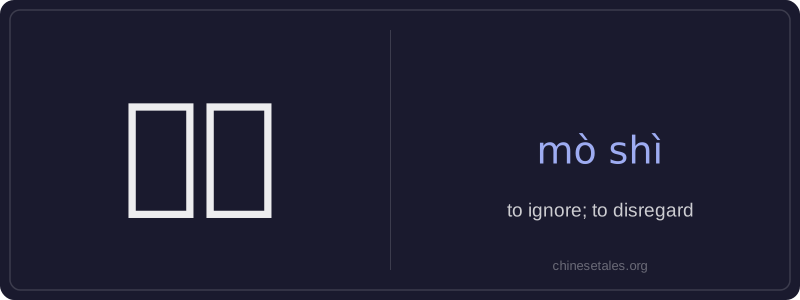
‘漠视’ is a verb meaning ‘to ignore’ or ‘to disregard’—not just to fail to notice, but to do so with indifference, detachment, or coldness. The first character 漠 (mò) originally means ‘desert’, evoking emptiness, barrenness, and emotional barrenness; the second character 视 (shì) means ‘to look at’ or ‘to regard’. Together, they form a compound suggesting ‘to look upon something as if it were a desert—empty of significance or feeling’. This word carries a strong negative connotation, implying willful neglect rather than accidental oversight.
It’s commonly used in formal, written, or critical contexts—especially when describing social injustice, ethical failures, or institutional apathy. You’ll encounter it in news reports, essays, and speeches criticizing inaction toward suffering, environmental damage, or human rights issues. While it can be used transitively (e.g., 漠视规则), it rarely appears in casual speech and is almost never used for trivial or lighthearted ignoring.
Example Sentences
Related Words
国语
‘Guó yǔ’ literally means 'national language'—
无论谁
‘无论谁’ (wú lùn shéi) is a pronoun meaning
外语
‘外语’ literally means ‘outside language’ —
面条
‘面条’ (miàn tiáo) literally means ‘flour str
认同
‘认同’ (tóng rèn) is a verb meaning ‘to ident
不对
不对 (bù duì) literally combines 不 (bù), meani
认为
‘认为’ (rèn wéi) is a transitive verb meaning
违规
违规 (wéi guī) literally means 'to violate rules